run a humidifier in my bedroom from December through March, when Miami's humidity occasionally drops enough that my throat feels dry at night. It's an ultrasonic model — quiet, effective, and, as it turns out, a highly efficient bacterial distribution device if you don't stay on top of it.
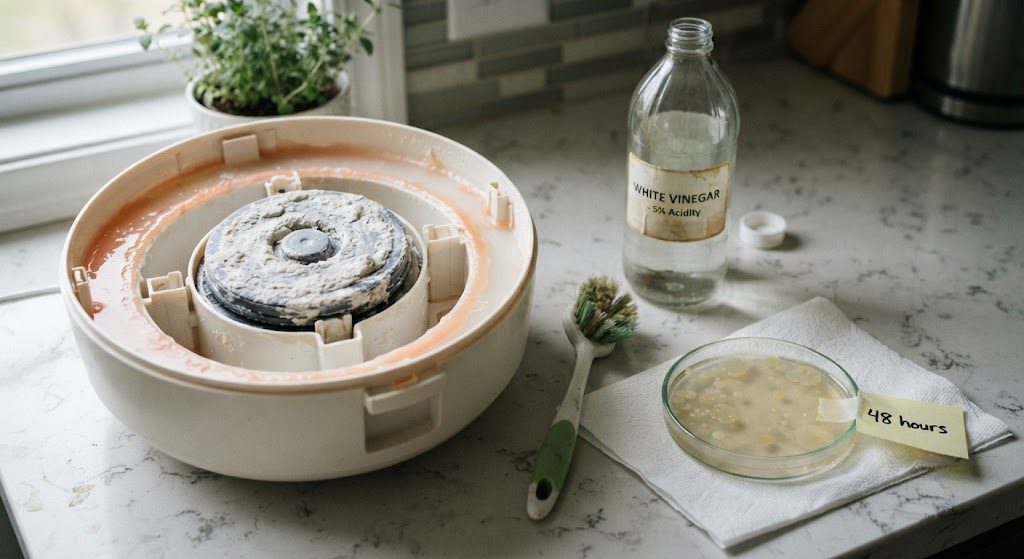
Last winter, after a week of nightly use, I noticed a faint musty smell when I refilled the tank. The water was clear. The smell was subtle. If I hadn't been paying attention, I would have topped it up and gone to bed. Instead, I opened the base and swabbed the reservoir. Then I did what any person with more curiosity than sense does: I streaked the swab onto a petri dish and left it on the kitchen counter for 48 hours.
The colonies that grew were not subtle. They were numerous, colorful, and exactly the kind of thing you don't want aerosolized eight inches from your face all night.
What Grows in a Humidifier (and How Fast)
Ultrasonic humidifiers work by vibrating a small plate at high frequency, turning water into a fine mist without boiling it. That mist carries whatever is in the water into the air — minerals, dissolved solids, and any microorganisms that have set up shop. Unlike steam humidifiers, there's no heat to kill bacteria. The water sits at room temperature in a dark, wet environment. It's essentially a petri dish with a fan.
The main culprits are:
Mineral scale: White crust from calcium and magnesium in hard water. It builds on the ultrasonic plate, reduces efficiency, and provides a rough surface for biofilm to cling to.
Biofilm: A slimy layer of bacteria that adheres to plastic surfaces. Once it forms, it's resistant to a simple rinse.
Mold and yeast: Thrive in the damp, dark tank and can trigger allergies and asthma.
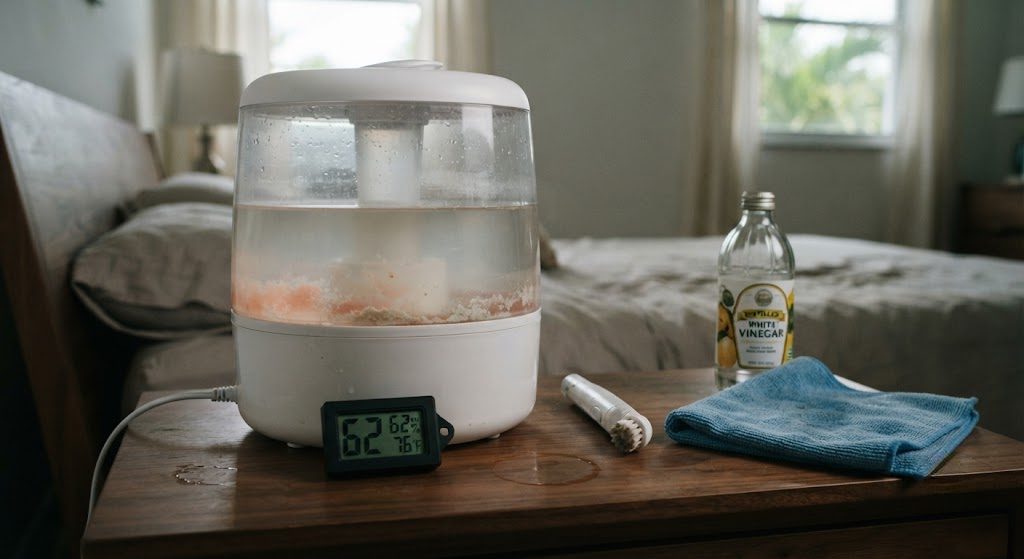
After one week of use in my Miami apartment, my tank had visible biofilm starting at the waterline and mineral buildup on the transducer plate. I cleaned it thoroughly, then ran an experiment: I divided the tank into two sections and used filtered water in one side (zero TDS) and tap water in the other. After another week, the tap water side had significantly more biofilm. The minerals in tap water act as a nutrient source. Filtered water helped, but it didn't eliminate the problem — it just slowed it down.
The Cleaning Routine That Actually Works
The manufacturer's instructions on my humidifier say to "rinse the tank daily and clean weekly." Almost nobody does that. I certainly didn't. But after seeing the petri dish, I changed my habits. Here's the routine that keeps the tank clean enough that I'm comfortable running it nightly:
Daily: Empty the tank completely every morning. Don't just top it off — stagnant water left all day accelerates growth. Let the tank and base air-dry.
Weekly: Scrub the tank, base, and any small crevices with a soft brush and white vinegar. Vinegar dissolves mineral scale and kills most bacteria and mold. Let it sit for 20 minutes, then rinse thoroughly. Avoid bleach — it can damage seals and leave a residue you don't want to aerosolize.
Use filtered or distilled water if possible. It reduces mineral buildup and starves bacteria of nutrients. It won't stop growth entirely, but it stretches the safe window between cleanings.
Replace the water before each use. Even if the tank still has water from last night, dump it. Fresh water every time.
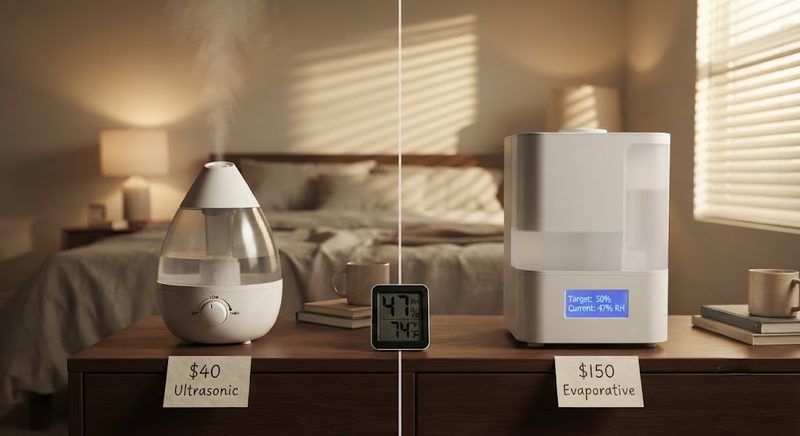
The bottom line: ultrasonic humidifiers are a great tool for dry-air months, but they require weekly maintenance. No exceptions. If you're not willing to scrub a tank every seven days, consider an evaporative humidifier with a replaceable wick instead — the wick captures minerals and the fan-only mist doesn't aerosolize bacteria as aggressively. Either way, don't be the person who only cleans the humidifier when it smells. Your lungs are worth more than a 10-minute scrub.