When I moved into my first Miami apartment, I didn't think of humidity as a variable. I thought of it as weather. It took one July — and a closet that started smelling like a boat — to understand that the air here isn't just warm. It's heavy, salty, and perpetually on the edge of condensation. Five years and 150 appliances later, I've learned that this city doesn't just test machines. It exposes them.
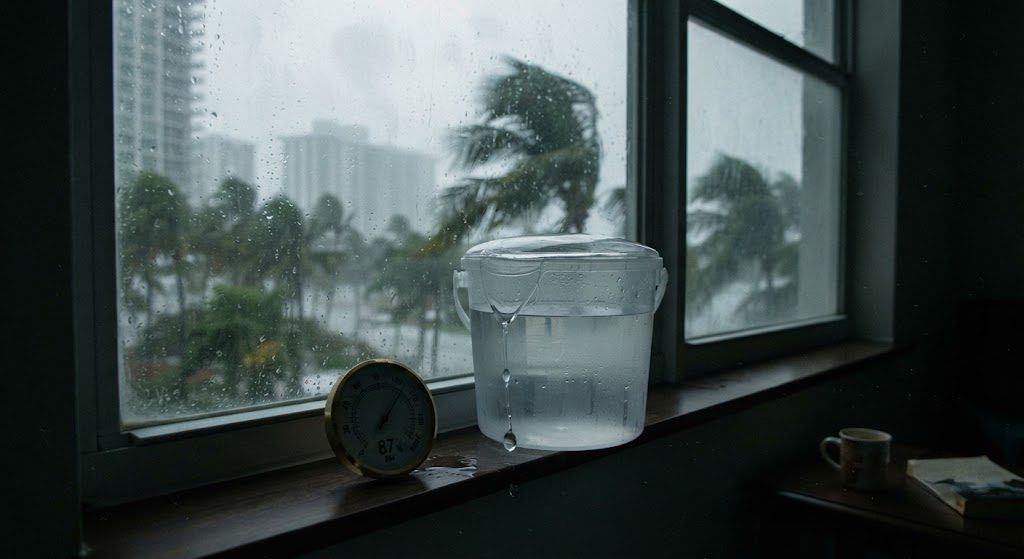
Lab tests for air purifiers, dehumidifiers, and humidifiers are conducted in stable, moderate conditions — 70°F, 50% RH, sealed chambers. That's not Miami. Miami is 85°F and 80% RH with a thunderstorm rolling in at 4 p.m. and salt air eating at seals. The gap between the spec sheet and my living room isn't a footnote. It's the whole story.
Dehumidifiers: Why the Pint Rating Isn't Enough
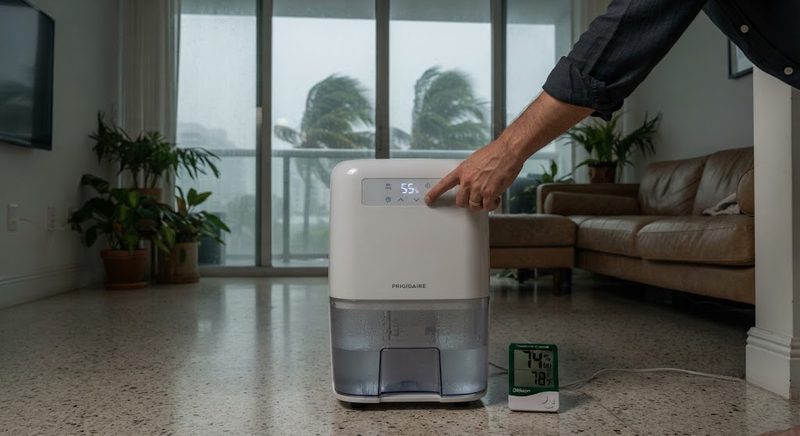
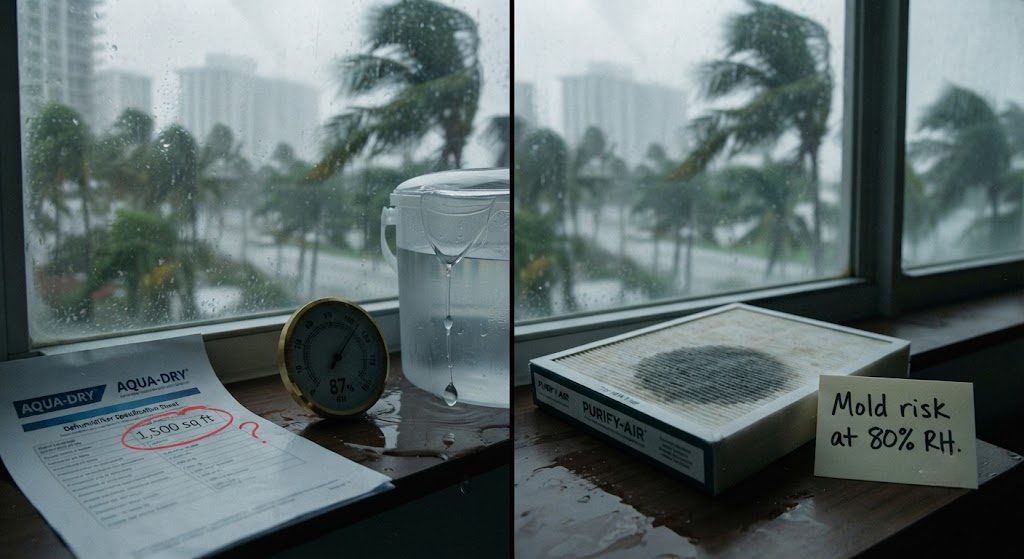
A 30-pint dehumidifier, according to its box, handles 1,500 square feet. That number comes from a test at 65°F and 60% RH. In my 400-square-foot bedroom during a wet July, the same unit ran 24 hours a day and couldn't get humidity below 68%. The air was so saturated that the bucket filled in six hours, but the room never felt dry. Why? Because the moisture load — the amount of water vapor constantly entering from outside air leaks, showers, and cooking — was far beyond what the pint rating assumed.
After that summer, I switched to a 50-pint unit. It cycled off at 50% RH within 24 hours and ran only 14 hours a day thereafter. The larger coil surface area and higher extraction rate made the difference. Miami taught me that pint ratings are a starting point, not a promise. Double the rating if you live near the coast and don't have a sealed building envelope.
Air Purifiers: Filter Life and Sensor Confusion
Humidity doesn't just make air feel thick — it changes how particles behave. Fine particulate matter (PM2.5) absorbs water, swelling and clumping. This alters laser particle sensor readings. I've watched calibrated particle counters spike during a humidity drop, not because particles increased, but because they shrank back to a size the sensor detects more efficiently. Auto modes that rely on these sensors can misinterpret humidity shifts as pollution events, ramping fans for no reason — or worse, miss actual smoke because moisture-laden particles look different.
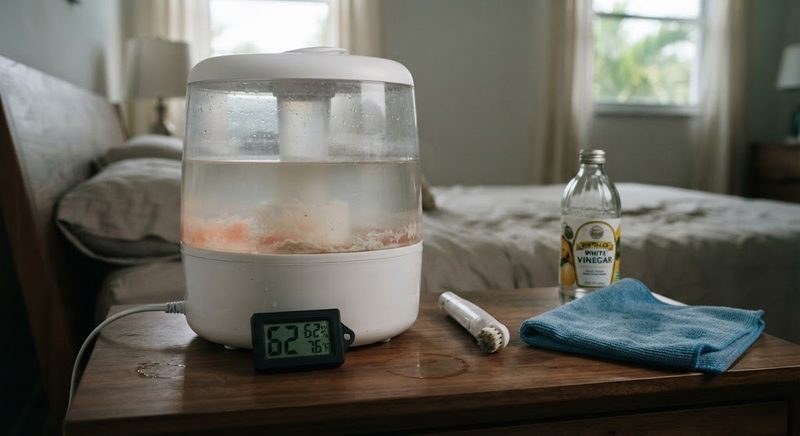
Filter life also takes a beating. HEPA media is paper-based. In 80% RH, mold spores can colonize a damp filter within weeks. I've pulled filters that looked fine on the surface but smelled of mildew when the fan kicked on. I now recommend changing filters 20–30% sooner in coastal climates, regardless of what the replacement indicator says.
Humidifiers: The Rarely Used Reverse Lesson
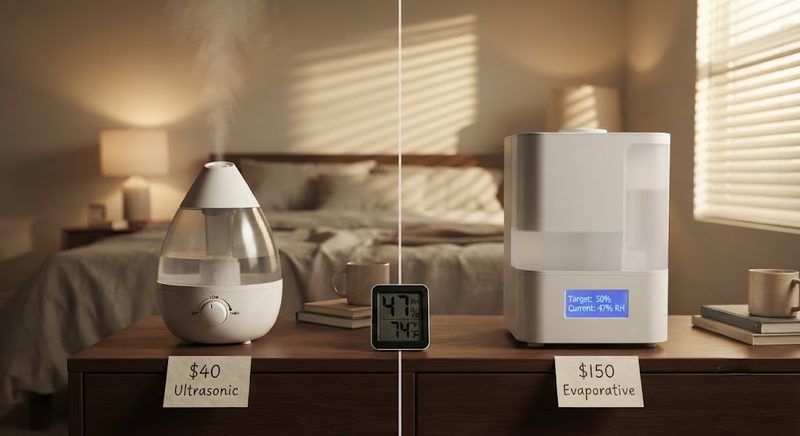
Miami rarely needs a humidifier, but when winter AC pulls indoor air down to 35% RH, I've used them. The lesson from the opposite side: ultrasonic humidifiers in a semi-humid room don't just add moisture — they can overshoot rapidly. A cheap unit without a humidistat once pushed my bedroom to 72% overnight, waking me up clammy and triggering the dehumidifier. The spec sheet said "ideal for rooms up to 300 sq ft." It didn't mention that in a space already holding 50% RH, the output curve is completely different. Context is everything.
The Big Takeaway: Climate Is the Spec You Don't See
Every appliance I test carries a spec sheet written in a lab. But Miami has become my calibration check: if a machine can handle this air, it can handle almost anything. When I review a dehumidifier now, I don't just report its pint rating — I report what it did in a room with the windows sweating. When I test a purifier, I watch the sensor in a rainstorm.
The next time you're shopping, look at the conditions behind the numbers. If the spec doesn't mention humidity, assume the worst — and buy a machine that's overqualified for a dry lab. Your actual air, wherever you live, is probably tougher than the test chamber.