If you have white crust around your faucets, stiff laundry, or a shower door that looks permanently dusty, you have probably asked, what does a water softener do? In plain English, a water softener reduces certain minerals in hard water before that water reaches your fixtures and appliances. The result is less scale, better soap performance, and fewer deposits inside plumbing.
That does not mean a softener is a magic water purifier. It does not remove every contaminant, make unsafe water safe, or automatically improve every unpleasant taste. I look at these systems the same way I evaluate air cleaners: start with the problem, measure what is actually present, and avoid paying for a dramatic-looking box that solves something else.
How a water softener works
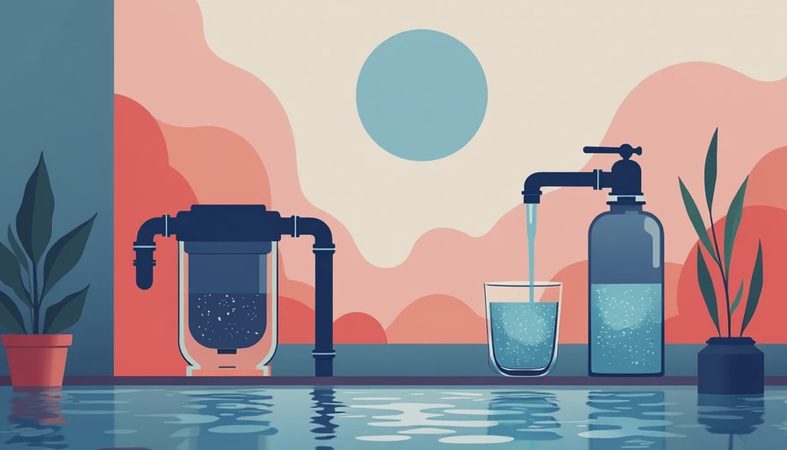
Most conventional softeners use ion exchange. Water flows through a tank filled with resin beads. Those beads attract calcium and magnesium, the minerals mainly responsible for hardness. In exchange, the resin releases a small amount of sodium or, in some systems, potassium into the water. The treated water then travels through your home's pipes.
Eventually, the resin becomes loaded with hardness minerals. A control valve starts a regeneration cycle, flushing the bed with a concentrated salt solution. That brine removes the trapped calcium and magnesium, and the waste goes down a drain. The system then rinses the resin and returns to service.
This explains why salt-based softeners need salt, electricity, a drain connection, and periodic maintenance. A typical household unit might use roughly one bag of salt every few weeks, although water hardness, household size, and water use can shift that considerably. Metered models regenerate based on actual usage, which is generally smarter than an old timer that regenerates whether the tank is exhausted or not.
A true softener is different from a sediment filter, carbon filter, reverse osmosis system, or ultraviolet purifier. Those products target different problems. A sediment filter catches particles, carbon can reduce chlorine and some odors, reverse osmosis reduces many dissolved substances at a drinking-water tap, and ultraviolet treatment addresses microorganisms. Mixing up these jobs is how homeowners end up with an expensive setup that still leaves the bathtub covered in scale.
What does a water softener do for daily life?
The most obvious benefit is less mineral scale. Hard water can leave chalky deposits on faucets, showerheads, glass, and the heating elements inside water heaters. After softening, those deposits usually build more slowly, so cleaning becomes less of a weekly wrestling match. You will still need to clean existing scale; a new system does not erase old buildup overnight.
Soft water also lets soap lather more easily. Many people notice that shampoo rinses differently, towels feel less stiff, and laundry comes out with less of a dull, scratchy feel. You may be able to use less detergent, but do not assume the savings will instantly pay for the equipment. The strongest financial case is usually avoided maintenance and improved comfort, not a miracle reduction in every household bill.
Dishwashers and water heaters can also benefit. Scale acts like an unwanted insulating layer on heating surfaces, and deposits can restrict small passages in valves and fixtures. A softener cannot repair an already damaged appliance, but reducing new buildup can help protect equipment that uses hot water.
For renters, the practical answer to what does a water softener do may be more limited. A whole-house system normally requires plumbing changes, a drain, an electrical outlet, and permission from the property owner. A shower filter is easier to install, but most shower filters are not genuine water softeners. They may reduce chlorine or sediment, while leaving calcium and magnesium largely untouched.
What a water softener does not remove
A softener is not a complete drinking-water treatment system. It generally does not remove lead, bacteria, viruses, pesticides, PFAS, or every dissolved chemical. It also does not reliably remove sulfur odors, although some specialized systems combine softening with other treatment stages.
If your water tastes like chlorine, a carbon filter may be more relevant. If testing shows elevated nitrate, arsenic, or another specific contaminant, choose treatment designed and certified for that contaminant. If the concern is bacteria from a private well, start with a proper water test and professional guidance rather than buying a softener based on a neighbor's recommendation.
The added sodium deserves attention too. Softened water is not ideal for everyone on a sodium-restricted diet, and some homeowners prefer unsoftened water at the kitchen tap. A common arrangement sends softened water through the house while routing the cold drinking-water line through a separate filter or bypass. That setup gives you scale control without making the kitchen supply your only option.
How to tell whether you need one
Start with a water hardness test. City water reports sometimes list hardness, while private-well owners can order a laboratory test or use a reputable home kit as an initial screen. Hardness is commonly reported in grains per gallon or milligrams per liter as calcium carbonate. The exact threshold for “hard” varies by reference, but visible scale and poor soap performance are practical clues that matter in your home.
Next, inspect the pattern. White crust on fixtures points toward hardness. Orange staining may suggest iron. A rotten-egg smell suggests hydrogen sulfide or another water-quality issue. Cloudiness can involve sediment or air. These symptoms can overlap, so a test is more useful than guessing from a shopping-page quiz.
For a family of four, installed prices often land somewhere around $800 to $2,500 for a conventional system, with premium equipment costing more. Installation complexity, local labor, plumbing access, and drainage can move that number substantially. Salt adds an ongoing cost, commonly measured in a few dollars to more than ten dollars per month depending on use and local pricing.
Choosing the right system without wasting money
Look for a metered-demand valve, a resin capacity matched to your household, a clear warranty, and service parts that are easy to obtain. Fleck and Clack valves are widely recognized in the industry, while brands such as Whirlpool, GE, and Aquasure sell systems through retail and online channels. The brand name matters less than correct sizing, honest specifications, and dependable local service.
Avoid selecting a unit solely because it advertises a huge grain number. Oversizing is not automatically better, and undersizing can trigger frequent regeneration. Ask the installer how much hardness the system is designed to handle, how much salt it uses per regeneration, and whether the quote includes a bypass valve, drain connection, startup programming, and haul-away of an old unit.
Salt-free conditioners deserve careful wording. Some use template-assisted crystallization or similar methods intended to reduce the way scale sticks to surfaces. They do not remove calcium and magnesium through ion exchange, so they are not equivalent to a conventional softener. They can fit homes where salt handling or wastewater discharge is a concern, but expectations need to match the technology.
The bottom line
So, what does a water softener do? It reduces calcium and magnesium hardness through ion exchange, helping control scale and improving how water behaves with soap, laundry, fixtures, and hot-water equipment. It does not replace a drinking-water filter or solve every stain, odor, or contamination problem.
Test first, identify the actual complaint, and then price a correctly sized system. If your faucets are crusty, your shower glass is losing the battle, and your water test confirms hardness, a softener can be one of the more sensible home upgrades. If the issue is taste or a chemical contaminant, spend your money on treatment that targets that specific problem instead.