A water softener is one of those appliances you notice most after it fails to do anything. The box may promise silky showers and spotless glass, but hard water does not care about glossy product photography. It leaves calcium deposits on faucets, shortens the life of water heaters, and turns soap into a disappointing film. I have tested filtration equipment in Miami, where mineral-heavy water, humidity, and salt air expose weak hardware quickly. Here is how to spend your money on a system that changes the water instead of merely sitting beside the plumbing.
What hard water is doing inside your home
Hard water contains dissolved minerals, mainly calcium and magnesium. Those minerals are not usually a health emergency, but they are rough on fixtures and appliances. A white crust around a showerhead is the obvious clue. Less visible damage builds inside a tank water heater, dishwasher, washing machine, and coffee maker. Scale acts like insulation around heating elements, so equipment can use more energy and heat water less efficiently.
The right water softener removes those hardness minerals through ion exchange. Resin beads inside the tank attract calcium and magnesium, then release sodium or potassium ions. During regeneration, the system flushes the captured minerals down a drain and recharges the resin with brine. That is the proven approach when your goal is genuinely softer water.
A simple test kit can tell you whether the problem is worth solving. Hardness is commonly reported as grains per gallon, or GPG. A reading below about 3 GPG is considered soft, while water above 7 GPG is generally hard enough to create noticeable scale. Your local water report can provide a starting point, but a tap test is more useful because private wells and household plumbing can change the result.
Salt-based versus salt-free systems
A salt-based water softener is the option I would choose when a home has visible scale, stiff laundry, or a water heater that keeps collecting mineral buildup. It uses a brine tank and resin tank, and it measures or estimates your water use before regenerating. A properly sized unit can cost roughly $500 to $2,000 before installation, with professional plumbing often adding several hundred dollars.
Salt-free systems are usually conditioners, not true softeners. They can reduce the tendency of minerals to form hard scale, but they do not remove calcium or magnesium. That distinction matters. If you want less spotting on a glass shower door, a salt-free unit might help. If you expect softer-feeling water, lower hardness readings, and better soap performance, it will not deliver the same result.
Salt consumption is not automatically a reason to reject a traditional system. Modern demand-initiated models regenerate based on actual water use rather than a fixed calendar. A household of two might use far less salt than a family of six, although the exact amount depends on hardness, water consumption, and programming. Look for an efficient control valve and a clearly stated regeneration setting instead of trusting a dramatic lifetime claim.
How to size the system without guessing
Sizing starts with two numbers: household water use and hardness. A rough planning figure is 50 to 75 gallons per person per day, including showers, laundry, cooking, and toilet use. Multiply the daily gallons by your hardness in GPG to estimate the daily grain load. Then choose enough capacity to cover several days without forcing regeneration every night.
For example, four people using 60 gallons each per day in water measuring 12 GPG create an estimated load of 2,880 grains daily. A unit rated around 32,000 grains could handle that demand, but advertised capacity is not always the same as usable, efficient capacity. A larger 48,000-grain tank may make sense if your home has guests, a large soaking tub, or high water use. Oversizing is not automatically better; an enormous system that sits too long between regenerations can waste resin capacity and create stale brine conditions.
A good installer should ask about peak flow rate, pipe size, drain access, and the number of bathrooms. A compact unit may fit a condo utility closet but restrict flow if its valve is undersized. In my own testing, the plumbing connections and control valve often mattered more than the tank label.

Installation, upkeep, and operating costs
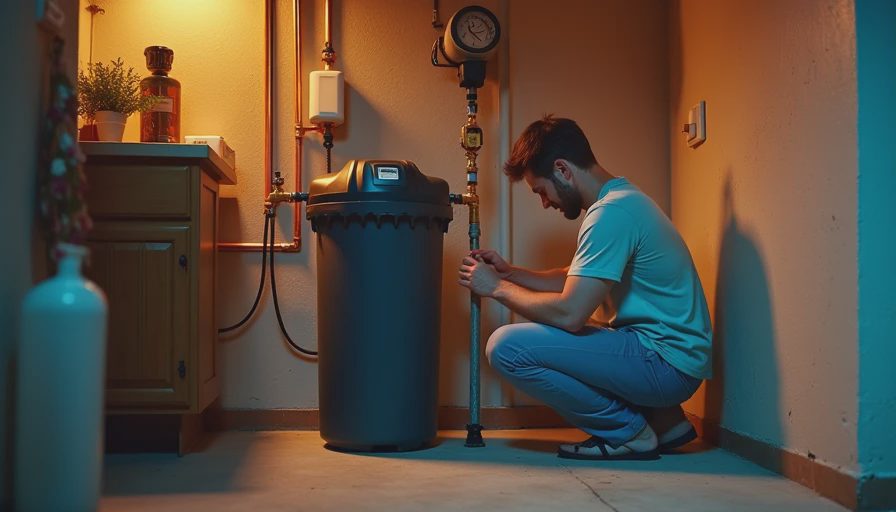
Installation is easiest on the main cold-water line, before water branches to the home's fixtures. The softener needs an electrical outlet, a drain connection with proper air-gap protection, and room to fill the brine tank. It should not soften outdoor hose bibs or irrigation lines. Sending softened water into a garden wastes salt and can harm plants.
Plan to refill the brine tank with water-softener salt every few weeks or months, depending on demand and settings. Use pellets or crystals approved for softeners, and avoid letting a solid salt bridge form above the water. Once or twice a year, inspect the brine tank, clean the injector if the manufacturer allows it, and confirm that the drain line is not kinked. Resin typically lasts many years, but iron, sediment, chlorine, and poor maintenance can shorten its useful life.
A realistic ownership budget includes salt, electricity, occasional cleaning, and service. Salt often costs around $5 to $10 per 40-pound bag, though local prices and usage vary. Rental plans can look inexpensive at $20 to $50 per month, but ownership may cost less over several years. Read the service agreement carefully for installation charges, resin replacement, cancellation fees, and required maintenance visits.
Features that deserve your money
Prioritize demand-initiated regeneration, a bypass valve, a clear hardness setting, and a control panel you can operate without calling a technician. A water softener with a metered valve is usually more efficient than a timer-based model. A low-salt alert is useful if the brine tank sits in a dark garage. Bluetooth or app controls are pleasant extras, but they do not compensate for a poor resin bed or weak valve.
If your water comes from a private well, test for iron, manganese, sediment, acidity, and tannins before buying. A softener can handle limited iron in some cases, but heavy iron may require a dedicated filter. Likewise, a whole-house carbon filter may be needed for chlorine taste, while a reverse-osmosis system belongs at a drinking-water tap when you want broader contaminant reduction. One appliance rarely solves every water problem.
My buying checklist for a cleaner tap
Start by testing hardness at the main kitchen tap and checking your water source. Measure the available installation space, locate the drain, and confirm whether the household plumbing can support the required flow. Get two installation quotes that identify every connection, shutoff, and disposal charge rather than accepting a vague package price.
Then compare usable capacity, salt efficiency, warranty coverage, and local service support. A dealer-installed system from brands such as Fleck, Clack, Culligan, or EcoWater can be sensible when replacement parts and servicing are easy to find. A less expensive online unit can also work, but only if you understand the valve, resin volume, and installation requirements.
The best water softener is not the biggest tank or the product with the loudest claim. It is the correctly sized system that removes measurable hardness, regenerates only when needed, and can be maintained without drama. Test first, budget for installation, and avoid paying extra for smartphone features when the basic water chemistry has not been addressed.