If you have watched sunlight expose a galaxy of particles over your sofa, you have probably asked: can air purifiers help with dust? The short answer is yes, but only with the dust floating through the room. A purifier cannot vacuum your baseboards, pull settled grit from carpet, or replace a clogged HVAC filter. It can capture airborne particles before they land, which is useful for allergy control and for slowing that familiar layer of gray on furniture.
I test air cleaners in Miami, where open windows, construction dust, humidity, and constantly running air conditioning create a tougher environment than a tidy showroom. The machines that impress me are not necessarily the most expensive ones. They move enough air through a real filter, run quietly enough to stay on, and do not pretend that a blue LED equals clean air.
What a purifier can and cannot remove
To understand can air purifiers help with dust, separate airborne dust from settled dust. A particle floating after someone walks across a rug is within reach of an air purifier. A particle already sitting beneath the bed is not. The purifier pulls room air through a filter, traps particles, and returns cleaner air. Repeated circulation gradually reduces the amount available to settle again.
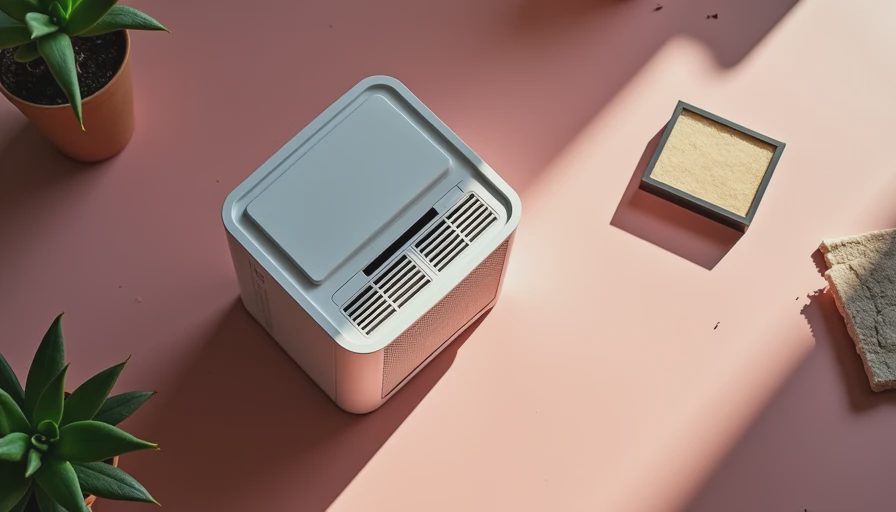
A true HEPA filter is the important part for ordinary household particles. It is designed to capture very small particles, including many fragments associated with dust, pollen, and pet dander. Larger particles can also be trapped, though they often settle quickly before reaching the machine. A washable mesh prefilter catches hair and lint, while the pleated HEPA layer handles the finer material.
The machine will not eliminate dust completely. People shed skin flakes, fabrics release fibers, and outdoor air enters whenever a door opens. If your home has a leaky window, an old carpet, or a renovation underway, the purifier is managing the load rather than winning a permanent victory.
How to choose a dust-focused air purifier
When readers ask can air purifiers help with dust, I start with airflow, not the marketing word “coverage.” Look for a published CADR, or clean air delivery rate, and match it to the room where the unit will run. A small desktop purifier with a low airflow rating may help beside a bed, but it will struggle in an open living room connected to a kitchen.
For a bedroom around 150 to 250 square feet, a purifier with a moderate smoke or dust CADR is a sensible starting point. For a 400-square-foot living area, step up to a larger unit or use two smaller machines. Manufacturers calculate room coverage under different assumptions, so CADR is more useful than a giant square-foot number printed on a box.
I also check replacement-filter prices before recommending a model. A $120 purifier that needs a $60 filter every six months can cost more than a $250 machine with a $35 annual filter. Brands such as Coway, Blueair, Winix, Levoit, and Honeywell offer models across several price tiers, but the specific model's airflow and filter design matter more than the logo.
Placement and settings make a measurable difference
Can air purifiers help with dust if the unit is hidden behind a chair? Not very efficiently. Give the intake and exhaust several inches of clearance. Put the purifier near the area where dust enters or gathers, such as a bedroom, home office, or hallway leading to an exterior door. Do not wedge it inside a shelf or press it against a curtain.
Run the machine continuously on a quiet setting rather than blasting it for twenty minutes once a week. Air cleaning is a circulation game. A low-speed setting that runs overnight often beats a loud turbo cycle that gets switched off after ten minutes. Auto mode can be convenient, but basic particle sensors sometimes react to cooking smoke more clearly than to ordinary settled dust.
For a visible dust event, such as sanding drywall, use a higher setting while the work is happening and afterward. Close interior doors if possible, and keep the purifier away from the direct path of heavy debris. No consumer purifier is a substitute for respiratory protection or proper construction cleanup.
The cleaning routine still matters
People often wonder can air purifiers help with dust when their shelves look dirty again two days later. That is not proof the purifier failed. It may mean the room produces dust faster than the unit can remove it, or that cleaning is stirring up settled material.
Use a vacuum with a sealed system and a clean filter, especially if the home has carpet or pets. Dust high surfaces first, then vacuum floors so falling particles are captured rather than redistributed. A slightly damp microfiber cloth is better than a dry feather duster, which tends to launch particles into the air. Wash bedding weekly if dust-mite allergens are a concern, and keep indoor humidity in a moderate range; excessive humidity can encourage other indoor-air problems.
Replace the purifier's prefilter according to its condition, not just the calendar. In a dusty room, vacuuming or rinsing a washable prefilter every few weeks can protect airflow. Never wash a disposable HEPA filter unless the manufacturer specifically says it is washable.
A realistic before-and-after expectation
Here is the result I want from a dust purifier: less airborne debris after walking across a rug, fewer particles visible in a sunbeam, and a filter that shows it has done work after several weeks. I do not expect a spotless coffee table. In a typical bedroom, running an appropriately sized unit overnight can noticeably improve the air near the bed, especially when doors and windows stay closed.
The biggest improvement usually comes from combining three actions. First, reduce the source with door mats, regular vacuuming, and HVAC filter changes. Second, place a correctly sized purifier where people spend time. Third, run it long enough to cycle the room repeatedly. If you only perform the second step, results will be limited.
For shoppers on a budget, a basic purifier with a real particulate filter and affordable replacements can be a better buy than a $500 model loaded with app features. Wi-Fi control, voice assistants, and colored air-quality rings are conveniences. They do not compensate for weak airflow or an expensive filter supply.
The bottom line for dusty homes
So, can air purifiers help with dust? Yes, especially airborne dust and the fine particles that circulate after movement, cleaning, or HVAC operation. They are most effective when sized by airflow, positioned in the occupied room, and left running consistently. They are not a vacuum, a duct repair, or a cure for a moisture problem.
Before buying, measure the room, compare CADR, inspect the replacement-filter price, and check whether the unit has a genuine HEPA or high-efficiency particle filter. Then keep vacuuming and change your furnace or HVAC filter on schedule. That combination costs less than chasing a miracle appliance, and it produces the kind of cleaner, less dusty room a purifier can realistically deliver.