Air filters are one of those purchases that look simple until you stand in front of a shelf packed with HEPA labels, carbon claims, washable screens, and replacement packs priced like printer ink. I have tested more than 150 air-quality machines in Miami humidity, and the basic lesson is straightforward: air filters only help when the material, airflow, and replacement schedule match the room.
That last part gets ignored constantly. A thick filter is not automatically better, and a purifier with a glowing blue light is not automatically cleaning anything meaningful. The useful question is how much particulate matter a filter removes while the fan is running at a tolerable noise level. A particle counter tells me more than a marketing badge ever will.
The main types of air filters
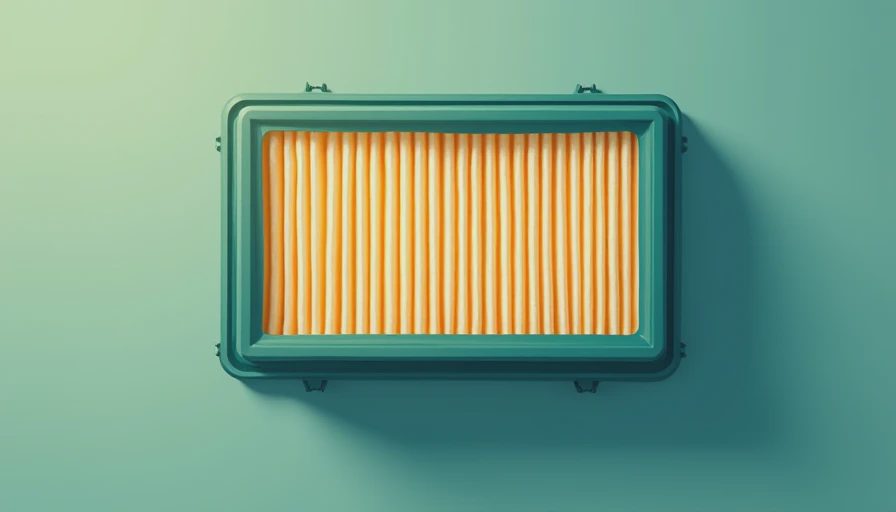
The most common option for portable purifiers is a pleated mechanical filter. It uses layers of synthetic fibers to capture airborne particles as air passes through. A true HEPA filter is designed to capture at least 99.97 percent of particles at the most difficult test-particle size under standard conditions. That is a serious performance benchmark, but it does not tell you how much air the machine moves through the room.
A small purifier with an excellent HEPA sheet can still clean slowly if its fan is weak. Conversely, a larger unit with a slightly less impressive filter can produce better room-level results because it circulates more air. I pay attention to clean air delivery rate, room coverage, fan speed, and measured particle reduction together rather than treating the word HEPA as a magic spell.
HVAC furnace filters are a separate category. MERV ratings describe how effectively a filter captures different particle sizes, with higher numbers generally offering more filtration. A MERV 8 filter is common in residential systems, while MERV 11 or MERV 13 can capture more fine particles. However, a filter that is too restrictive for an older blower can reduce airflow and strain the system. The right upgrade depends on the equipment, not just the biggest number on the package.
What to look for before buying
Start with the room where the problem is most obvious. For bedroom allergies, measure the room and compare it with the purifier's stated coverage at a useful fan speed, not only its maximum claim. If the machine has to scream all night to reach that number, the practical coverage is smaller. In my own testing, a quiet medium setting that runs continuously often beats a powerful unit used for an hour before bedtime.
For smoke, cooking odors, or a condo near constant construction, particle filtration is only half the job. Activated carbon can reduce some gases and odors, but the amount matters. A paper-thin carbon-coated sheet is not equivalent to a purifier containing several pounds of carbon pellets. When product listings describe carbon without giving its weight, I assume the odor-control benefit will be modest.
Avoid confusing an ionizer with a mechanical filter. Ionizers can charge particles so they settle on surfaces, and some designs can produce ozone. Ozone is not a useful indoor-air shortcut, particularly for people with respiratory sensitivity. If you want predictable removal, choose a machine that pulls air through a physical filter and allows the ionizing feature to remain off.
Replacement cost is part of performance
Air filters are consumables, not permanent accessories. A portable purifier may need a replacement every six to twelve months, while a heavily used unit in a home with pets, renovation dust, or smoke can load up sooner. Replacement prices often range from about $20 for a basic small-unit cartridge to $100 or more for a large proprietary assembly.
That purchase price changes the real cost of ownership. A $120 purifier with $25 filters can be easier to live with than a $70 model whose replacement cartridge costs $55. Before buying, search the exact model number and confirm that replacement air filters are actually available from the manufacturer or a reputable retailer. I have seen attractive clearance machines become useless once the last compatible cartridge disappeared.
Washable prefilters are useful because they catch hair and larger dust before those materials reach the main filter. They do not eliminate the need to replace the fine-particle filter. Vacuum the prefilter gently or rinse it only when the manual permits it, then let it dry fully. Moisture trapped inside a purifier is a bad shortcut in a humid place like Miami.
How I judge real-world results
I begin with a baseline reading, close windows and doors, and record particle levels before turning on the machine. Then I introduce a controlled particle source and watch how quickly the reading falls at low, medium, and high fan speeds. I also measure sound because a purifier that drops particles quickly but sounds like a bathroom exhaust fan may spend most of its life switched off.
This testing reveals the difference between air filters that merely exist and a system that works. Automatic mode is another useful check. Some sensors respond quickly to a particle spike, while others barely react when I create a repeatable test event. A sensor reading is not the same as clean air, but a responsive sensor can make continuous operation more efficient.
I also inspect the seal around the filter. Air follows the path of least resistance, so gaps around a cartridge let dirty air bypass the filter media. A well-designed gasket and a correctly seated replacement can matter more than a dramatic claim printed on the box. That is why I never judge a unit from specifications alone.
Air filters for allergies, pets, and smoke
For seasonal allergies, look for a genuine mechanical particle filter and enough airflow for the bedroom or living area. Put the purifier several feet from walls and curtains, and keep doors positioned according to the room you want to clean. It will not remove every trigger from carpets, bedding, or outdoor air entering through an open window, but it can reduce airborne particles while operating.
Pet owners should prioritize a washable prefilter and an accessible main cartridge. Fur is visible, while the smaller dander particles are not, so a machine that only catches hair can create a false sense of success. For smoke, choose strong airflow plus substantial carbon if odor reduction matters. No purifier makes indoor smoking safe, and ventilation remains important.
For a whole-house HVAC setup, inspect the existing filter monthly at first. A dusty coastal home, a shedding dog, or nearby remodeling can change the replacement interval. Make sure the filter arrows point toward the blower, and never operate the system without a properly fitted filter. An expensive MERV upgrade is wasted if air leaks around the frame.
A practical buying plan
Measure the room, check the purifier's replacement price, and look for an independently stated CADR rather than relying on an oversized square-footage promise. Confirm the noise rating at the speed you expect to use. If you sleep lightly, a quiet low setting and continuous operation are more valuable than a dramatic maximum-speed number.
Then estimate one year of ownership. Add the machine price, two possible replacement air filters, and any subscription or shipping cost. A straightforward model from Coway, Blueair, Levoit, or another established manufacturer is not automatically right for every room, but common models usually have easier-to-find parts than an anonymous marketplace listing.
My final rule is simple: buy filtration you will maintain. Clean the prefilter, replace the main cartridge on schedule, and use a particle reading when possible. If you want help comparing a specific room, budget, and noise limit, bring those details to the next review. The right air filters are not the most expensive ones; they are the ones that move enough clean air every day without becoming an abandoned gadget.