If you have watched dust settle on a black TV stand five minutes after cleaning, you have probably asked: does air purifier remove dust? The honest answer is yes, but only when the machine can move enough air through a properly designed particle filter. It will not make your home permanently dust-free, and it cannot replace vacuuming, bedding changes, or fixing a leaky window. It can, however, reduce the airborne dust that eventually lands on your furniture and gets breathed into your nose.
I test purifiers in a humid Miami apartment, where open windows, construction debris, ceiling fans, and salty outdoor air make easy claims fall apart quickly. The useful question is not whether a purifier catches a little dust. Nearly any filter does. The useful question is how quickly it cleans a real room, how loud it gets, and whether replacement filters are affordable enough to keep the performance from fading.
What kind of dust can an air purifier catch?
Household dust is a mixture of skin flakes, fabric fibers, soil, pollen, hair fragments, and other particles. Some pieces are large enough to fall onto the floor immediately. Others stay suspended for minutes or hours, especially when a fan, HVAC system, pet, or walking person stirs them up. Those airborne particles are the ones a purifier has a realistic chance of capturing.
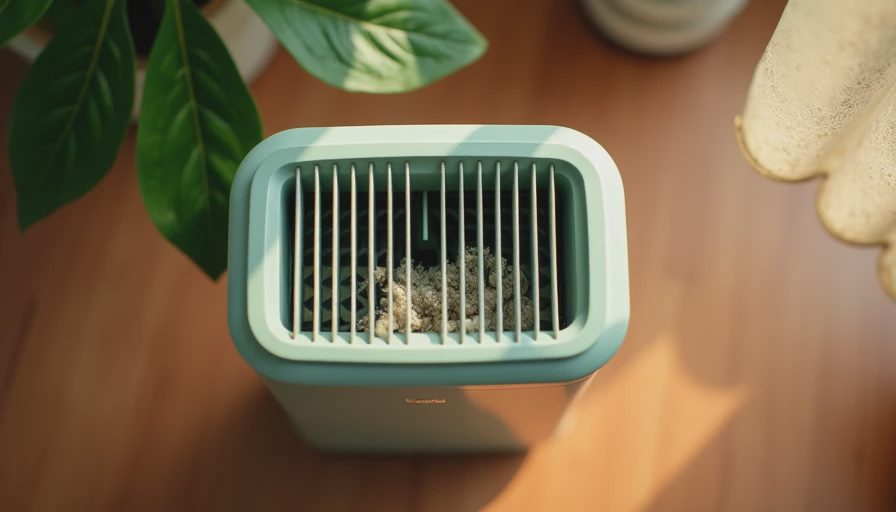
A true HEPA filter is the strongest dust-focused feature to look for. It is made from dense fibers that trap particles as air passes through. A washable screen or basic foam prefilter can catch visible lint and hair, but it is not the same as a HEPA filter. Activated carbon is useful for some odors and gases; it is not the part doing most of the dust removal.
Does air purifier remove dust from a carpet or shelf? No. A purifier works on particles suspended in the air, not settled debris. If you can see a gray layer on your bookshelf, the machine cannot reach backward in time and pull it off. Vacuum with a sealed system, damp-dust hard surfaces, and then let the purifier handle what your cleaning activity sends airborne.
How effective is a purifier in a normal room?
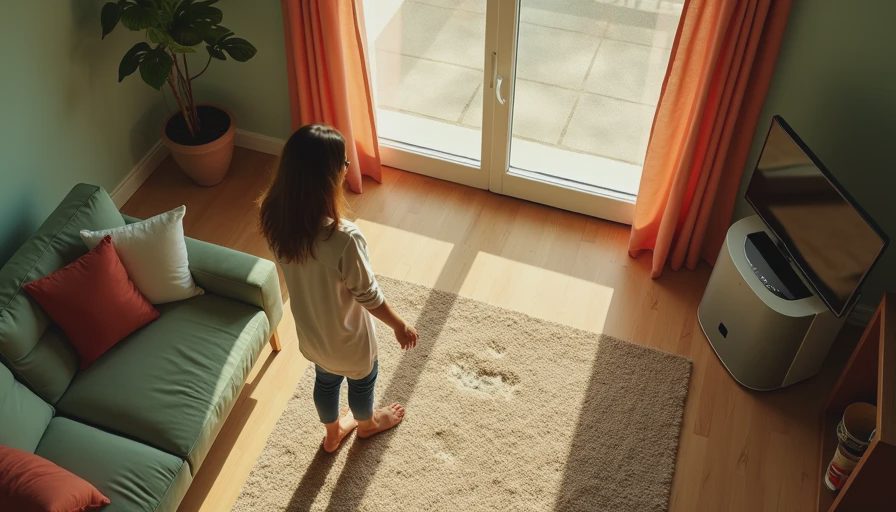
Airflow matters as much as the filter. A small desktop unit with a weak fan may contain a perfectly respectable filter but clean only a corner of a bedroom. A larger unit with a higher clean air delivery rate can process the room repeatedly, which is what lowers airborne particle levels in practice.
For a bedroom around 150 square feet, I would generally look for a unit rated for at least that size and run it on a steady setting rather than relying entirely on an optimistic auto mode. For a 400-square-foot living room with an open kitchen, a compact $50 purifier is usually outmatched. Two smaller machines can work, but one appropriately sized unit is often simpler and quieter.
In my tests, particle levels fall fastest during the first several minutes after a controlled disturbance, then decline more gradually. That pattern makes sense: the purifier catches the easy airborne load first, while particles hiding in upholstery, rugs, and curtains continue to shake loose. Does air purifier remove dust overnight? It can remove a meaningful amount of suspended dust while you sleep, especially with the door closed, but it cannot stop new dust entering through gaps or being generated by bedding.
Features worth paying for, and features I ignore
Start with a replaceable pleated filter, a published room-size rating, and enough fan power to circulate air without sounding like a bathroom exhaust fan. A filter-life indicator is convenient, although many are just timers rather than sensors. A washable prefilter is genuinely useful in homes with pets because it protects the main filter from hair and lint.
I am less impressed by colorful air-quality rings, ionizer buttons, and vague “dust removal” percentages without a test condition. An ionizer can change how particles behave, but it is not a substitute for mechanical filtration and can introduce ozone concerns depending on the design. Wi-Fi is worthwhile only if you will use scheduling or remote control. Otherwise, it is another app waiting for a password reset.
Brands such as Coway, Blueair, Winix, Levoit, and Honeywell offer models across several price ranges, but the logo is not the decision. Compare airflow, filter cost, noise, and the actual footprint. A $130 purifier that needs a $60 filter every six months can cost more to operate than a $180 model with a $35 annual replacement.
Why dust still appears after running the machine
Does air purifier remove dust if the windows stay open? It may catch some of it, but an open window can continuously load the filter with outdoor particles. In Miami, humidity also makes dust cling to surfaces and encourages people to run ceiling fans and air conditioners, both of which redistribute settled material. Close windows during the first cleaning cycle, place the unit where air can reach its intake, and give it several hours before judging the result.
Placement makes a surprising difference. Do not wedge the purifier behind a sofa or directly against a curtain. Leave the clearance listed in the manual, usually several inches around the intake and outlet. In a bedroom, a spot near the foot of the bed often works better than a corner. In a living room, keep it away from a wall but near the area where people spend time.
Maintenance is equally important. Vacuum or wash the prefilter according to the instructions, but do not rinse a disposable HEPA filter. Replace the main filter when it is loaded, damaged, or overdue according to the manufacturer’s schedule. A clogged filter can reduce airflow, increase noise, and turn an efficient purifier into an expensive box fan.
A simple test before you spend money
To evaluate a purifier, first dust and vacuum the room normally. Close the windows and doors, then run the machine on its highest practical setting for 30 to 60 minutes. Check whether the filter has a substantial intake area and whether airflow remains strong. If you own a particle counter, measure before and after; if not, inspect the filter after a few weeks and pay attention to visible dust around the room rather than expecting spotless furniture.
Does air purifier remove dust enough to justify the purchase? For allergy-prone households, pet owners, and anyone living near construction, the answer is often yes. The improvement is most noticeable when the unit is correctly sized and runs consistently. Expect cleaner air, not a showroom with no dust.
My buying advice is straightforward: choose mechanical filtration, prioritize airflow over decorative features, budget for replacement filters, and use the purifier alongside ordinary cleaning. A good model will not eliminate every speck, but it can reduce the airborne load that settles on your home and irritates your breathing. That is a useful result, and unlike a glowing LED ring, it is something your lungs can appreciate.