Why I Started Testing Air Purifiers with a Particle Counter and a Cigar
Five years ago, I was exactly the person I now write for: standing in the home appliance aisle, phone in hand, scrolling through thousands of 4.7-star reviews for an air purifier that looked sleek, promised “True HEPA” filtration, and had an Auto mode that supposedly adjusted to air quality in real time. I lived in a one-bedroom in Brickell, Miami. Humidity was a constant companion. I wanted cleaner air for sleep and allergy relief. I bought the machine.
For the first few days, it hummed quietly in the corner. The air felt… fine. No dramatic transformation, but I trusted the little blue ring that said everything was optimal.
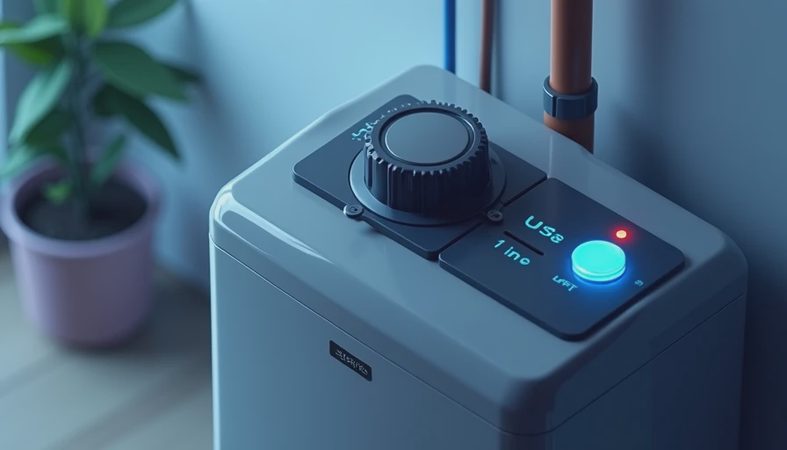
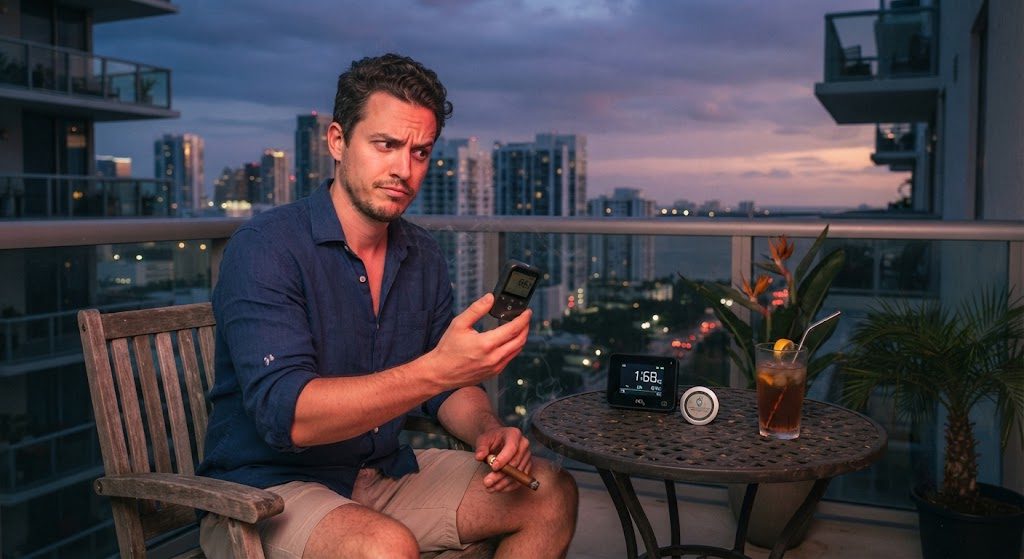
Then came my Friday evening ritual: a cigar on the balcony. When I stepped back inside, I could smell the smoke that had followed me through the sliding door. It hung in the living room, unmistakable. I glanced at the air purifier. Its indicator light remained blue. Auto mode had not noticed a thing.
That weekend, I bought a handheld particle counter — the kind that measures particles down to 0.5 microns. I set it on the coffee table, lit a match, blew it out, and watched the display spike past 1,500. The air purifier sat there, Auto mode engaged, light steady blue. Twenty-two minutes later, the particle count finally dropped back to baseline. When I reached over and manually set the fan to maximum, the same clearing took eight minutes.
That single mismatch — between what the machine claimed to detect and what a calibrated meter actually recorded — changed everything. I felt like I’d been sold a story. The numbers told a different one.
The Lab That Grew from a Matchstick
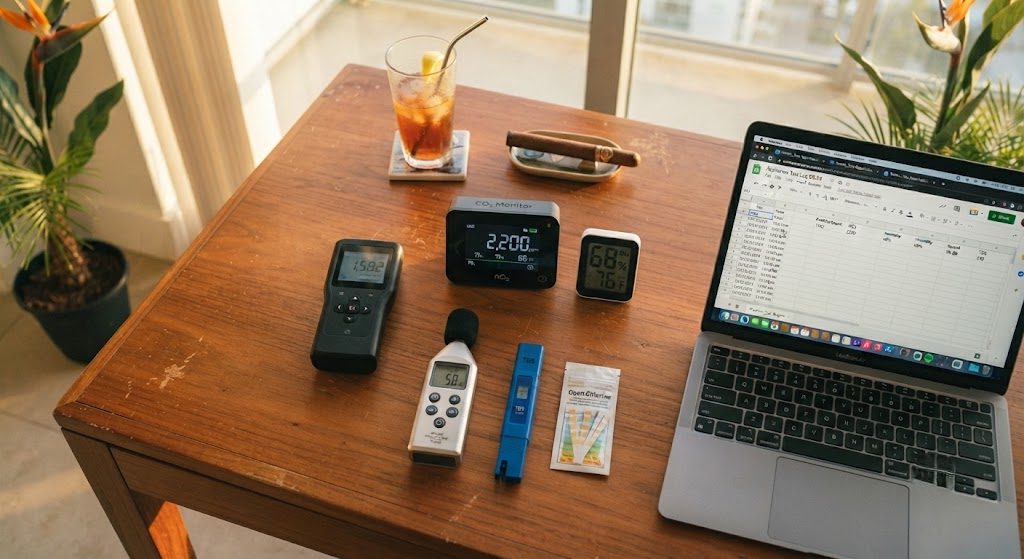
That particle counter was the first instrument in what is now a full home test bench. Over the following months, I added a CO₂ monitor after realizing my bedroom spiked to 2,200 ppm overnight — enough to affect cognitive function and sleep quality, regardless of how “clean” the air felt. A humidity logger came next when a dehumidifier I’d bought for the rainy season couldn’t hold my closet below 68% RH. Then a sound level meter, because “whisper-quiet” doesn’t mean anything without decibel readings. A water quality meter followed, then chlorine test strips, then a TDS pen for tap water tests.
Before I knew it, I had a spreadsheet tracking over 30 variables across every appliance that entered my apartment. Friends started asking what to buy. Then friends of friends. Then strangers on forums. Five years and over 150 units later, that spreadsheet has become Breath & Tap.
Why the Cigar Still Matters
I still light a cigar on the balcony once a week. It’s part pleasure, part calibration check — a controlled smoke source that lets me see exactly how fast a purifier’s sensor responds and how quickly the fan brings particle counts back down. It’s not a lab-grade ASHRAE test, but it’s real, repeatable, and brutally honest. If a machine’s Auto mode can’t catch a detectable plume of smoke, it won’t catch your cooking fumes or your neighbor’s wildfire drift.
Every review on this site starts from that same principle: if it doesn’t move the needle on a calibrated meter, I don’t care what the Amazon listing says. You deserve to know what’s actually happening in the air you breathe. Not what a marketing team wants you to believe.