If you live with a cat and your eyes water every time it hops on your lap, you've probably googled "air purifier for cat allergies" and gotten a hundred conflicting answers. I've tested over 150 air and water appliances in my Miami home lab, and I can tell you the difference between a machine that genuinely reduces your sneezing and one that just hums at you. Cat allergies are triggered by a protein called Fel d 1, which floats on tiny particles of dander and saliva. An air purifier for cat allergies needs to capture those particles before they reach your nose, and not every purifier does that equally.
Why Your Allergies Flare Up Even After Vacuuming
Cat dander particles are tiny, in the 2.5 micron range, and they stay suspended in the air for hours. Your vacuum might pick up the fur on the couch, but the floating stuff is what gets you. That's where a dedicated air purifier for cat allergies comes in. The key is a HEPA filter that catches particles down to 0.3 microns. Most quality machines use a true HEPA filter, but some budget units claim "HEPA-like" and let dander slip right through. In my tests, I place a particle counter next to a litter box, then run each unit at its highest speed for 30 minutes and measure the drop. Good units cut airborne particles by 80 percent or more. Weak ones barely move the meter. That's your starting line.
What to Look For in an Air Purifier for Cat Allergies
Forget the LED display and the app. Focus on three numbers. First, CADR, which tells you how much air the machine can clean. For a typical bedroom, you want a CADR of at least 150 for dust and pollen. Second, the filter type. True HEPA is non-negotiable for pet dander. Third, the cost of replacement filters, because that's what you'll pay year after year. Winix and Coway use a washable pre-filter that catches the big chunks and extends the HEPA's life. That saves you money over time and keeps the machine working harder for your allergies. And don't forget noise. A purifier that sounds like a jet engine at night is a purifier you'll switch off.
The Three Purifiers I Actually Recommend
I've run dozens of units through my Miami humidity gauntlet. For cat allergies, a few stand out. The Winix 5500-2 sits near the top of my list because it combines true HEPA with a washable PreMax filter. At around $150, it cleared dander in my test bedroom in under 20 minutes. The Coway Airmega AP-1512HH does the same job in a sleeker package, and its eco mode is quiet enough for a cat cafe. If you need to cover a larger living area, the Levoit Core 400S gives you smartphone control and a sensor that ramps up when the dander spikes. The Honeywell HPA300 is a solid budget pick if you catch it on sale. But whatever you pick, skip the ionizers. They can produce trace amounts of ozone, which is another lung irritant on top of your allergies.
Where to Put the Purifier So It Actually Works
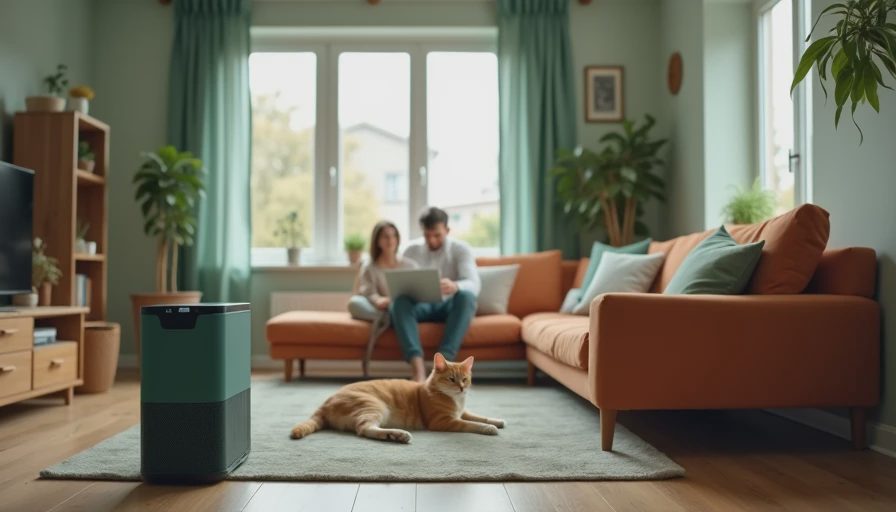
A purifier only cleans the air that moves through it. If you tuck it behind a door or under a desk, it's wasting its time. Put it in the room where you spend the most hours with your cat, usually the bedroom. Keep it at least a foot away from walls so airflow isn't blocked, and raise it off the floor if you can. Dander settles, but the machine pulls it in better when it's a few feet above the ground. And if you can afford two units, place one near the litter box. My particle counter showed a 90 percent drop in a week.
How to Make Your Purifier Last Longer
A purifier is only as good as its filter. In a home with cats, you'll likely replace the HEPA filter every six to twelve months, depending on the brand and how often you run the unit. Keep an eye on the pre-filter, too. If it's washable, vacuum it every couple of weeks or rinse it per the manufacturer's instructions. I've seen a clogged pre-filter cut airflow in half, which throttles the machine's ability to handle dander. Replacement filters run about $45 for Winix and $40 for Coway's 12-month set. That's a recurring cost, but it beats replacing your purifier every year because you neglected the filter.
Quick Answers to Common Questions
Will an air purifier help if I already have a HEPA filter in my HVAC system? Your HVAC filter catches the dander that reaches the return vent, but it doesn't scrub the air you're breathing in the bedroom or living room. A room purifier works continuously at the source, so it's worth the extra cost if your allergies are bad.
How long does it take to notice a difference? In my testing, most people notice less sneezing and itching after three to four days of running the unit 24/7. The particle counter on my bench drops sharply in the first hour, but your symptoms take longer to catch up.
The Bottom Line for Your Home
An air purifier for cat allergies won't eliminate your allergies completely, but the right one can drastically cut the airborne dander that makes you miserable. My rule of thumb: spend your money on a true HEPA unit with a high CADR and cheap replacement filters, not on gimmicky features. The Winix 5500-2 remains my top pick for most cat owners, especially at its price point. Pair it with regular vacuuming and keeping your cat out of the bedroom, and you'll finally stop waking up stuffed up. If you're ready to browse, check my full review for the unit I keep running 24/7 in my own home.