A Water Filter System That Made a Noticeable Difference in Taste
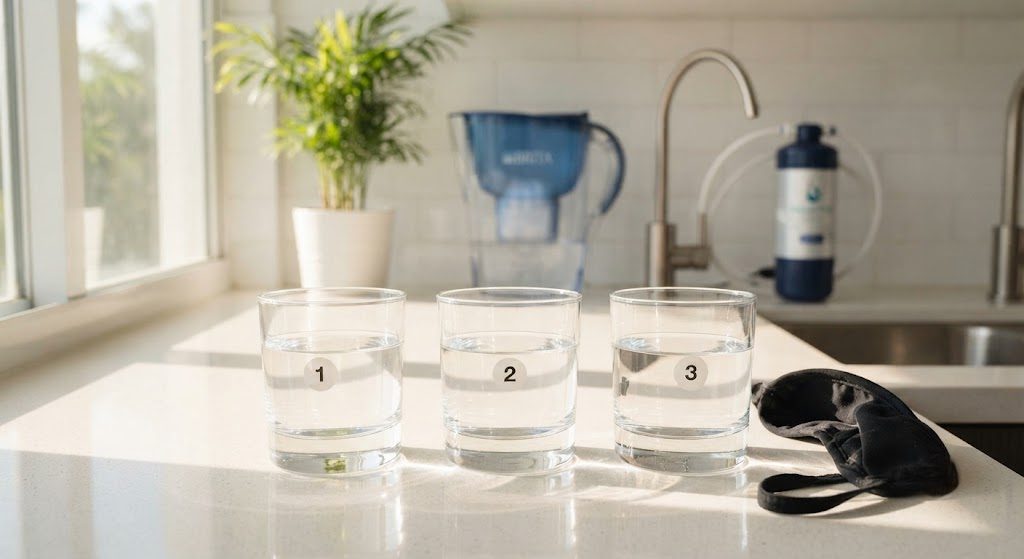
Measuring water quality with a TDS meter is straightforward. Measuring taste is messier. But taste is what most people actually care about — whether the water from the filter tastes clean, neutral, and refreshing, or whether it still carries a whisper of the municipal treatment plant. I decided to settle it the old-fashioned way: a blind taste test with three friends, three popular filtration systems, and a glass of straight Miami tap as the control.
The Contenders
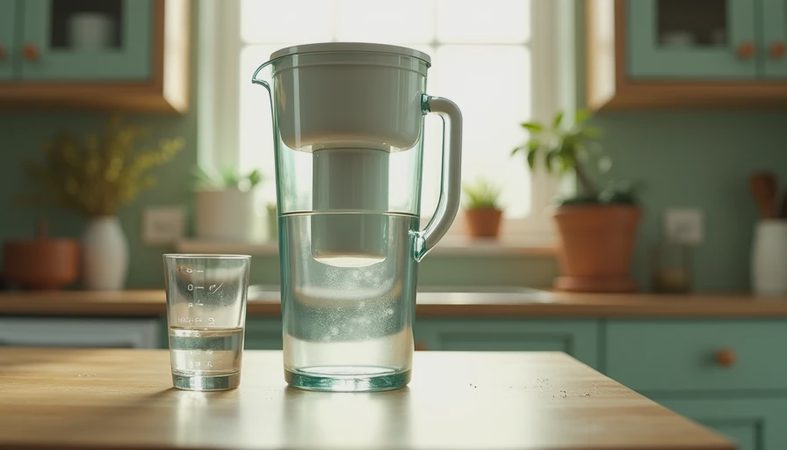
I selected four water sources for the test. First, unfiltered Miami tap water — my baseline, measuring 218 ppm TDS and carrying a faint chloramine note. Second, a standard Brita pitcher filter, the entry-level option that removes chlorine but not much else. Third, a countertop activated carbon block system with a more substantial filter area and a dedicated spout. Fourth, water from my under-sink reverse osmosis system, which strips virtually everything down to single-digit TDS. Each was poured at room temperature into identical, unmarked glasses. My three friends — Carla, Diego, and Priya — had no idea which was which.
The Tasting Protocol
Each person tasted all four glasses in random order, cleansing their palate with plain crackers and still water between sips. I asked two questions: "Which one tastes the cleanest?" and "Would you drink this daily?" They scored each glass on a simple 1-to-5 preference scale. I also measured TDS and free chlorine in each sample so I could compare the technical data to the sensory results.
What the Taste Buds Said
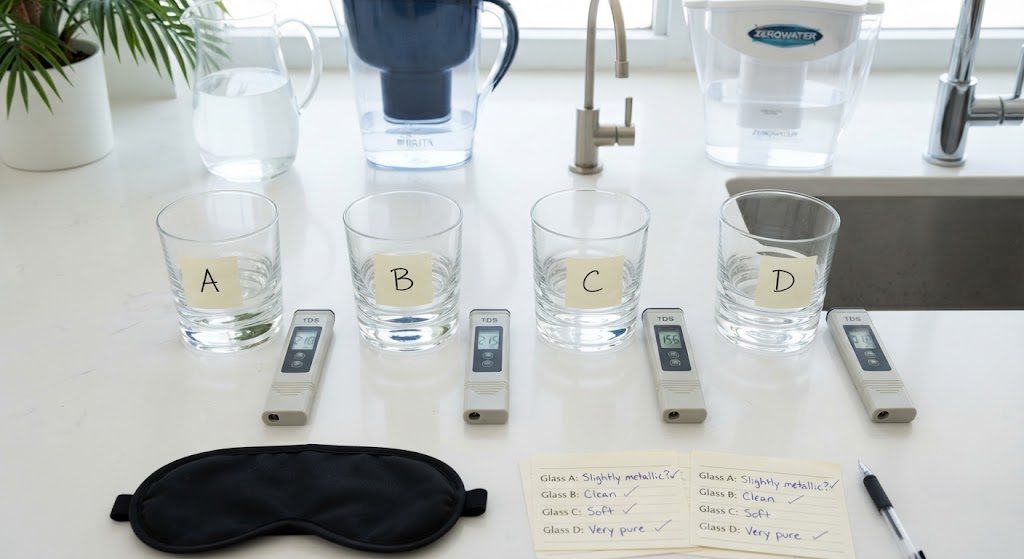
Unfiltered tap water was identified almost immediately. "Pool party," Diego said after one sip. The chloramine taste, while not overwhelming, was unmistakable. All three ranked it last. The Brita water fared better — "definitely cleaner, still a hint of something at the back," Priya noted. It averaged 3 out of 5 across the group. The countertop carbon block system surprised everyone. "This tastes like nothing — in the best way," Carla said. It scored 4.5 on average, with two people ranking it first. The RO water also scored 4.5, with one first-place vote and two very close second-place votes. Diego described it as "almost too clean — like it's missing something," which is exactly what zero TDS water tastes like.
The countertop carbon block and the RO system effectively tied on preference, but the reasons were different. The carbon block water retained a trace of mineral character that Carla found more "natural," while the RO water was purely neutral. Both were vastly better than tap and noticeably better than the Brita.
What the Meters Said
The TDS readings aligned with taste but didn't fully predict it. Tap water measured 218 ppm. Brita: 215 ppm — no meaningful change. The countertop carbon block: 156 ppm, a modest 28% reduction in dissolved solids but enough to soften the water's mouthfeel. The RO system: 12 ppm, a 94% drop. Chlorine was undetectable in both the carbon block and RO samples; the Brita reduced it to about 0.5 ppm from 1.8 ppm. The taste differences between carbon block and RO came down to minerality, not chlorine — which explains why they scored equally despite wildly different TDS readings.
The Verdict
If you want the best-tasting water possible and don't want to install anything, a countertop carbon block system with a good filter area delivers remarkably clean, neutral-tasting water for under $100. The RO system is the ultimate solution if you're willing to drill a hole in your counter and spend $200–$300 upfront. Both will make your tap water taste like it came from a different city — one without the pool-party note. The Brita is fine for casual use, but in a blind lineup, it's a clear step behind.
Clean water doesn't have to taste clinical. It just has to taste like nothing, and these two systems deliver exactly that.