Do air cleaners remove dust? Yes, but only the dust floating through the air and passing through the machine. They do not reach under your sofa, wipe a ceiling fan, or pull years of settled debris from carpet fibers. That distinction is the difference between buying a useful appliance and expecting a small plastic box to replace cleaning day.
I test air-cleaning appliances in Miami, where open windows, coastal humidity, construction grit, and constantly running air conditioning create a realistic dust challenge. The machines that earn space in my apartment do two things well: they move enough air and capture particles with a filter that is fine enough to matter.
What kind of dust can an air cleaner capture?
Household dust is a mixture, not one single substance. It can include fabric fibers, skin flakes, soil tracked indoors, pollen, pet dander, and tiny particles from outdoor pollution. Some pieces are large enough to settle quickly on furniture. Others remain airborne for minutes or hours, especially when a person walks across a rug, folds laundry, or turns on a ceiling fan.
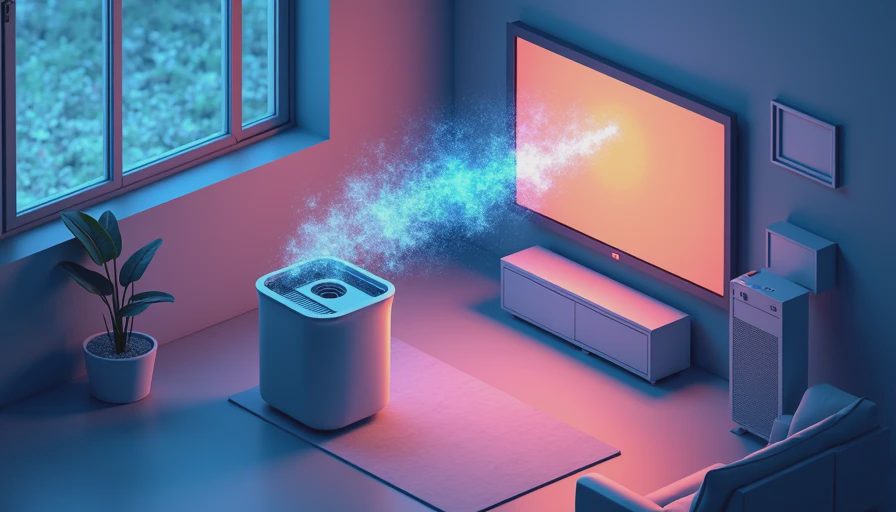
Air cleaners are most useful against that airborne portion. A fan draws room air through a filter, and the filter traps particles before the cleaner sends the air back out. A true HEPA filter is designed to capture very small particles efficiently, while a washable mesh prefilter catches larger lint and hair before they load the main filter.
This is why a cleaner can make a room feel less dusty without making dust disappear from every surface. A particle that is already sitting on a bookshelf is not going to climb into the intake by itself. Air movement, human activity, and time have to lift it first.
The result is practical rather than magical. You may see less dust collecting between cleanings, notice fewer particles in a sunbeam, or find that a bedroom feels cleaner after the unit runs overnight. The furniture still needs a microfiber cloth.
Do air cleaners remove dust better with a HEPA filter?
Usually, yes. For dust removal, look for a unit with a genuine HEPA filter or a clearly specified high-efficiency particle filter. Be cautious with listings that simply say “HEPA-type,” “HEPA-like,” or “dust filter.” Those labels do not tell you the same thing about filtration performance.
A HEPA filter is only half of the equation. The machine also needs a reasonably sealed housing and enough airflow. A perfect filter inside a weak fan will process very little room air. That is why I pay attention to clean air delivery rate, commonly shown as CADR, rather than judging a purifier by its marketing square-footage claim. A larger CADR generally means the unit can clean a room faster.
For a small bedroom, a compact model with a strong airflow rating can be sensible. For an open living room, a tiny desktop appliance is mostly decorative unless it runs very close to you. In a 400-square-foot space, I would rather see a properly sized unit running at a moderate speed than a small unit screaming on its highest setting all day.
Activated carbon is useful for odors and some gases, but it is not the feature that captures ordinary dust. UV lights, ionizers, and colorful air-quality displays also do not substitute for airflow and particle filtration. The filter and fan deserve your money first.
How to choose an air cleaner for a dusty room
Start with the room where dust bothers you most. Measure its approximate length and width, then compare that space with the manufacturer’s airflow information. If the listing only provides an impressive room-size number and no meaningful CADR or airflow detail, treat the claim cautiously.
Next, examine the filter design. A replaceable HEPA filter with a separate washable prefilter is easier to maintain than a single thin cartridge. The prefilter is especially valuable if you have pets, long-haired household members, or a home near active construction. It catches visible debris before that material clogs the expensive inner filter.
Noise matters because an air cleaner that is too loud will spend most of its life switched off. Listen to the unit on its middle setting, not only its silent sleep mode. A purifier that moves useful air at a tolerable sound level is more effective than a technically excellent model abandoned in a closet.
Placement matters as well. Leave open space around the intake and outlet, keep the unit away from curtains, and place it near the dust source when practical. A bedroom unit belongs where it can circulate bedroom air, not behind a dresser where the intake is blocked.
Do air cleaners remove dust from carpets and furniture?
Not directly. Carpets, upholstered chairs, bedding, and fabric curtains act as dust reservoirs. Walking, vacuuming, and changing sheets disturb those materials and put some particles back into the air. The cleaner can capture a portion after they become airborne, but it cannot extract embedded dust from the fabric.
The best approach combines source control with filtration. Vacuum carpets and rugs with a machine that has good particle containment, wash bedding regularly, and use a damp microfiber cloth on hard surfaces. Dry dusting often sends debris into the air, where it can settle again a few minutes later.
Run the air cleaner during and after cleaning if the filter is rated for particle capture. Closing windows during heavy outdoor dust or nearby construction can also help. In humid climates such as Miami, keeping indoor humidity in a moderate range reduces the sticky feeling that makes dust cling to surfaces, although a purifier itself does not dehumidify the room.
If your goal is fewer visible deposits, expect gradual improvement rather than a spotless home after one afternoon. The machine works on the air exchange cycle, not the dust already attached to your coffee table.
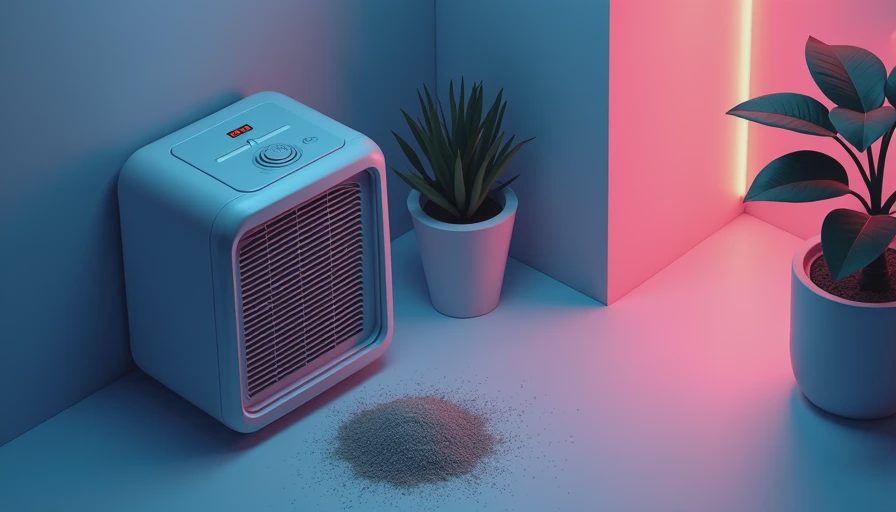
How often should you replace the filter?
Filter life depends on runtime, room size, pets, smoking, renovation dust, and outdoor air quality. A manufacturer might suggest six to twelve months, but that is a starting point rather than a promise. A visibly gray prefilter, reduced airflow, or a musty smell is a reason to inspect the cartridge sooner.
Do not wash a standard HEPA filter unless the manual specifically says it is washable. Water can damage the filter media and create a damp environment where odors become a problem. Vacuuming a delicate HEPA surface aggressively can also create gaps or reduce performance. Wash or brush the designated prefilter, then replace the main cartridge according to its condition and the manufacturer’s instructions.
Replacement costs deserve attention before purchase. A machine priced at $120 can become expensive if its filter costs $60 every few months. Conversely, a $200 model with a $30 to $45 replacement filter may be cheaper over several years. I keep those recurring costs in the same spreadsheet as noise and airflow because they determine whether an appliance remains useful.
The practical answer for your home
Do air cleaners remove dust? They remove airborne dust effectively when the unit has a good particle filter, adequate airflow, and consistent runtime. They do not replace vacuuming, laundering, or wiping surfaces. Think of the appliance as the part of your cleaning routine that works between chores.
For the strongest result, choose a properly sized HEPA-equipped unit, keep its intake clear, clean the prefilter, and run it in the room where dust is generated. Skip the model that spends its budget on an LED ring, vague “purification” language, or a tiny fan advertised for an entire floor.
If you are comparing models, start with CADR, filter replacement price, noise, and warranty. Those four details tell you far more than a glossy claim that the machine “eliminates dust.” A realistic air cleaner will not make your home maintenance-free, but it can make the air noticeably less loaded between cleanups—and that is a result worth paying for.