If you are shopping for a cool mist humidifier because your bedroom feels dry, your nose is irritated, or a fan alone is not cutting it, the first thing I want to save you from is the fake upgrade. A bigger box with a blue light is not a better machine. In Miami, where humidity already does plenty of the work, I still see people buy units that are hard to fill, hard to clean, and loud enough to annoy you at 2 a.m. A good cool mist humidifier should raise comfort without turning your dresser into a puddle or your credit card into regret.
What it actually does in a bedroom
A good cool mist humidifier is there to nudge indoor humidity into a more comfortable zone, not to make your room feel tropical. For most bedrooms, I like seeing relative humidity land somewhere around 40% to 50%, because that is usually where dry skin, scratchy throats, and static start calming down without the air feeling heavy. The two common types are ultrasonic, which uses a vibrating diaphragm, and evaporative, which pushes air through a wet wick. Ultrasonic units are often quieter and cheaper to run, while evaporative models can be better at avoiding the fine mineral haze some people call white dust. If you use tap water with a hard mineral load, that detail matters more than the glossy box copy.
When I compare a cool mist humidifier to the rest of the room, I care less about the promise and more about the real effect. If the machine cannot move the needle on humidity in a closed bedroom, it is just furniture with a cord. That is why size matters. A small 0.5-gallon unit can be fine for a nursery or office, but a real bedroom setup often does better with a tank in the 1 to 2 gallon range. That gives you fewer middle-of-the-night refills and fewer chances to wake up to a dead tank at 4 a.m.
The features that matter more than the marketing
When I look at a cool mist humidifier, the first question is whether I can fill it without cursing. A top-fill tank with a wide opening beats a narrow tank you have to flip, twist, and balance over the sink. The second question is cleaning. Smooth surfaces, fewer hard corners, and a removable base matter because standing water gets ugly fast. I have tested enough units to know that a cheap-looking tank can still be a smart buy if it is easy to scrub and easy to dry. Price-wise, the useful stuff often starts around $30 to $50 and gets nicer around $70 to $120, where you see better controls, bigger tanks, and less rattling plastic.
Brand-wise, this category has a few familiar names. Levoit and Dreo usually compete on features per dollar, Honeywell keeps things more straightforward, Crane leans into simple designs, and Vicks still pulls buyers who want a comfort-first bedside unit. None of that matters if the tank is a pain to maintain. The best value is usually the model you will actually refill and clean twice a week. If you need sleep help, look for a unit that stays quiet on low, because even a 35 to 40 dB hum can get old when it is six feet from your pillow.

How I test one in Miami humidity
My cool mist humidifier testing starts with a humidity logger, a sound meter, and a closed room that behaves like a real bedroom, not a showroom. I like to see how quickly a unit can move a 120-square-foot room from the high 30s into the mid 40s without blasting water into the air like a mist cannon. A solid performer should make a measurable change in about 20 to 30 minutes, then hold a steady level without swinging all over the place. I also pay attention to where the mist lands. If the unit leaves a wet ring on the nightstand or spits droplets onto the floor, that is not comfort. That is cleanup.
In Miami, the air already works hard to stay sticky, so a humidifier that is too powerful can feel silly fast. I do not want a machine that overshoots and makes the room clammy. I want control. The better units give you multiple output levels, an auto shutoff when the tank runs dry, and a sleep mode that dims the display. Those little details matter because a cool mist humidifier is supposed to disappear into the background after it does its job. If I can hear the thing over a quiet fan from across the room, it is not making the cut for a bedroom.
Cleaning is the whole game
A cool mist humidifier only earns its keep if you are willing to clean it. Skip that step and you invite slime, odor, and mineral buildup, which is how a comfort machine turns into a bad smell on your dresser. I tell people to empty it daily, wipe it out, and do a deeper clean every few days if they are running it often. White vinegar is still the basic move for mineral scale, and distilled water can reduce the crusty residue that builds up faster with hard tap water. If your machine has a wick filter, replace it on schedule. If it has a wide tank opening, you will use it more because the cleaning job will not feel like surgery.
This is also where bargain units can go sideways. A low sticker price does not help if the basin has sharp corners, hidden ledges, or a fill method that sprays water all over the counter. I would rather pay a little more for a design that takes five minutes to rinse than save twenty bucks and dread maintenance. A clean machine is usually a quiet machine too, because mineral gunk can make fans, pumps, and ultrasonic plates work harder than they should.
When a bigger model beats a cheap one
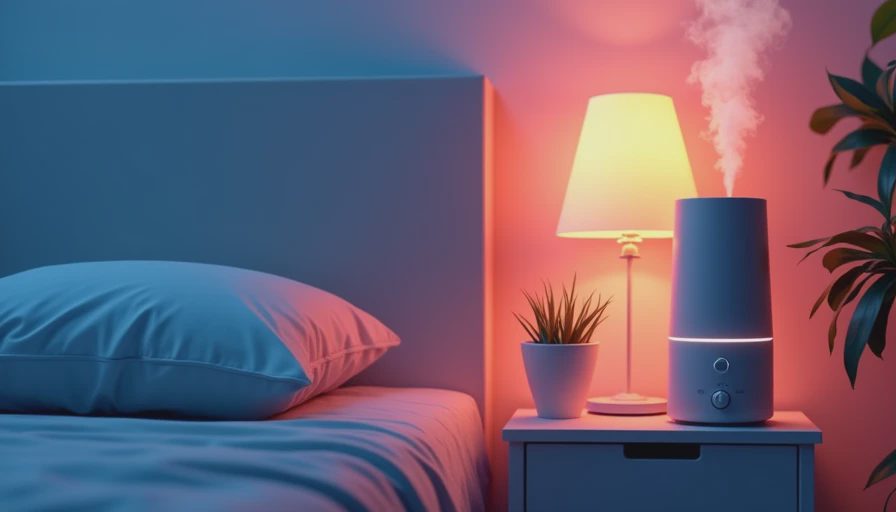
A bigger cool mist humidifier makes sense when the room is not tiny, the ceiling is high, or you simply do not want to live next to the sink. For master bedrooms and shared spaces, I like models with larger tanks, stronger output, and a real low setting that does not feel like a fog machine. That is where spending $80 to $150 can be easier to justify than buying a $35 unit twice. You are paying for longer runtime, better controls, and less annoyance. In the right room, that extra money buys fewer interruptions and a more stable humidity level overnight.
There is a limit, though. If you only need help in a small bedroom, a compact machine can be the smarter buy. You do not need a giant reservoir if you are going to run the thing on low for six hours and clean it every other day. The trick is matching the output to the space. Too little output and nothing changes. Too much output and you start chasing damp sheets. I have seen both mistakes, and the expensive one is usually the one that sounded impressive online.
My practical buying advice
If you want the short version, buy the coolest sounding product last and the easiest-to-clean product first. A good cool mist humidifier should be simple to fill, quiet on low, sized for your room, and easy enough to keep clean that you will not resent it in two weeks. That is the real test. The bedroom unit that helps you sleep is the one you can live with every day, not the one with the prettiest listing photos. If you are narrowing the field, compare tank size, refill style, noise level, and how fast you can scrub the parts after a week of use.
When a cool mist humidifier fits your room and your routine, it pays off quickly. You get less dry air, fewer wake-ups from a scratchy throat, and less guesswork about whether the machine is doing anything at all. That is the kind of purchase I like: boring in the best way, useful on night one, and still worth keeping after the novelty fades. If you want a real shortlist, start with models in the $50 to $100 range and skip anything that makes cleaning look like a weekend project.