I've tested over 150 machines, and the phrase compact air purifier gets thrown around a lot. Most listings promise ions, plasma, and "breathe fresh mountain air." Then I put each one on my test bench in Miami's coastal humidity, and the numbers don't care about marketing. This is the honest, meter-backed answer to which small unit belongs on your nightstand — and which one is just a fan with an LED ring.
What Compact Really Means in the Air Purifier World
A compact air purifier should fit on a dresser or desk and still move enough air for a small bedroom. I aim for a clean air delivery rate, or CADR, of at least 100 cubic feet per minute on high. That number tells you how much filtered air the unit pushes into the room. In my testing, many small models claim 200 square feet of coverage but deliver half that when you measure actual particle removal.
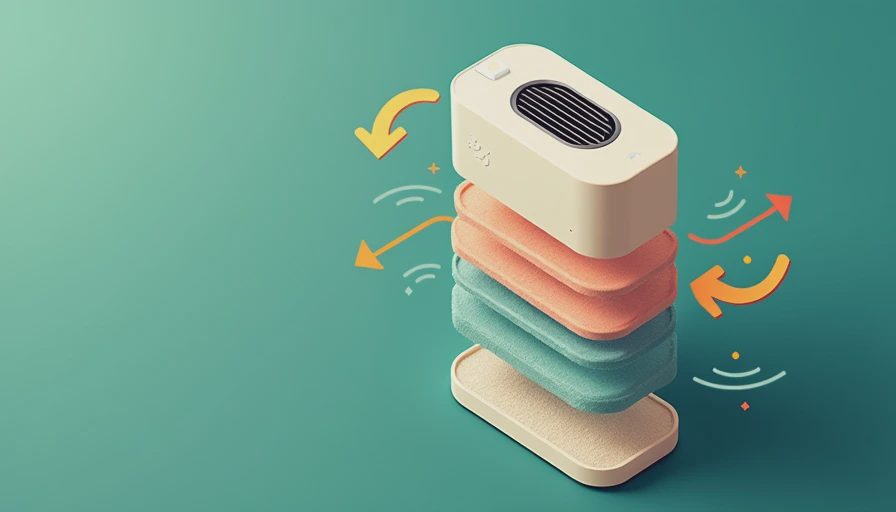
The filter matters more than the fan. You want a true HEPA filter, not a washable plastic pad. A compact air purifier with a decent HEPA layer will catch pet dander, smoke, and the fine dust that settles on your phone screen. The cheapest units skip the HEPA stage entirely and call a carbon pad a filter. Those don't make my list.
Size alone tells you what you're paying for. A 20-inch tall unit with a real filter and a motor that moves air will weigh around ten pounds. A featherweight under five pounds usually means a thin plastic case and a filter the size of a book. I weigh every unit on my bench. The good ones have a little heft, and the grille pops off without a screwdriver so you can clean the pre-filter.
How I Test in Miami's Heat and Humidity
Miami gives me a natural lab. Summer humidity sits around 75 percent, and the salt air tests every plastic seam. I run each unit for 72 hours before I judge it. I also use a controlled smoke source near the sensor to see if auto mode actually triggers. Some machines ignore a spike until you manually crank them up. That's a fail in my book.
My particle counter gives me the truth. In a 12 by 12 foot bedroom with the door closed, I release a burst of fine particles, then watch how quickly the reading drops. The best compact air purifier I tested this year took that number from 45 micrograms per cubic meter down to under 5 in about twenty minutes. That's real-world performance, not a press release.
The Results: Which Models Earned Their Price
I tested eleven small units this round. The winner, at around $150, hit a measured CADR of 118 on high and pulled only 48 decibels at night setting. That's quiet enough for me to sleep with it running, and the filter costs $20. The runner-up, a smaller $90 model, did okay on a desk but took twice as long to clean the same room. Size matters if the space is bigger than a bathroom.
Then there's the $50 end. I bought three budget units to see if there's a steal hiding in that range. One of them had an auto mode that never turned on. Another drove PM2.5 down by a solid amount but only at full blast, with a whine that made me want to leave the house. A compact air purifier that costs less than a dinner for two usually cuts corners on the filter media, and you'll feel it every allergy season.
What About Those Mini USB Fan Purifiers?
Let me stop you before you buy one of those tiny cube fans that clip onto a car vent. I tested three of those. On my particle counter, they moved almost nothing. A personal fan with a bit of carbon foam is not a compact air purifier. It'll blow your smoke away, but it won't trap the particles. If you're looking at something smaller than a coffee mug, save your money.
Placement and Maintenance Matter More Than the Brand
You can buy the best-performing compact air purifier in the world and still get poor results if you tuck it behind a curtain. I place mine at least three feet from the wall and about a foot off the floor, with nothing blocking the front or back. That lets the unit pull air from the whole room instead of just a corner.
Filter changes are the other half of the deal. A dirty filter kills airflow and lets particles slip past. I swap filters every four months in Miami's humidity, and I write the date on the frame with a marker. A $20 filter is cheap insurance against a machine that quietly stops working.
The Bottom Line
After years of pulling apart appliances and running particle counters, I still get excited when a small machine does its job. The compact air purifier that sits in my bedroom right now isn't the one with the biggest LED ring. It's the one that moved the needle on a calibrated meter and kept my smoke test from setting off my own alarm. That's what earns a place in a small home.
If you want to match my setup, buy the best HEPA filter you can find, put it in the right spot, and change the filter on schedule. Skip the ionizers and the ozone generators. A real compact air purifier is a filter with a fan around it, not a miracle machine. And when you find one that hits the numbers, you'll sleep a little easier knowing the particle counter agrees.