A small room air purifier should do more than glow blue and whisper about “clean air.” It needs to move enough air through a useful filter to reduce particles from dust, pollen, smoke, and cooking. I test these machines in real Miami rooms, where open windows, coastal humidity, condo construction, and the occasional balcony cigar expose weak performers quickly. The best small room air purifier is usually not the tiniest model on the shelf. It is the quiet machine with honest airflow, affordable replacement filters, and controls you will actually use.
Start with CADR, not the advertised room size
The first number I look for is CADR, or Clean Air Delivery Rate. It tells you how quickly a purifier can deliver filtered air for a specific particle category. A product listing might claim coverage for 900 square feet, but that number often assumes only a couple of air changes per hour. For a bedroom, office, or nursery, I prefer a unit with enough capacity to turn the room air over several times per hour.
For a 100- to 200-square-foot room, a practical target is roughly 100 to 200 CFM of smoke CADR. That does not mean the machine must run at maximum all night. More capacity lets you use a lower, quieter speed while still cleaning effectively. A compact model rated around 140 CFM can be a sensible fit for a bedroom, while a unit under 80 CFM is better reserved for a desk area or closet-sized space.
Ignore vague phrases such as “removes 99.9% of pollutants” unless the listing explains the test conditions. A filter may capture a high percentage of particles passing through it, but the whole-room result also depends on fan speed, leaks around the filter, and how much air the machine moves.
What filter setup should you choose?
For everyday household particles, a true HEPA filter is the main feature worth paying for. It can capture very small airborne particles, including much of the dust and pollen that triggers irritation. A washable prefilter is useful because it catches hair and larger lint before those materials clog the finer filter.
Activated carbon helps with odors, but the quantity matters. A thin carbon-coated sheet can take the edge off mild cooking smells; it will not magically erase heavy smoke or a musty room. When comparing a Levoit Core 300S, Coway Airmega 150, or Blueair 511, look at the replacement filter design and carbon volume rather than assuming every black filter layer performs equally.
Avoid ozone-generating “purifiers,” especially for bedrooms or spaces occupied by children and pets. Ionizers can also complicate the picture by producing charged particles that settle on surfaces instead of being physically trapped. I would rather have a straightforward fan, sealed filter, and clear maintenance schedule than a stack of flashy technologies.
Noise matters more than the product page suggests
A purifier can have excellent airflow and still fail if its motor sounds like a bathroom fan. Manufacturers often advertise a very low decibel figure measured on the lowest setting, where cleaning performance is limited. In a bedroom, listen for the sound at the speed you will actually use after cooking, vacuuming, or opening the windows.
A good small room air purifier should produce a soft, steady sound without clicking, rattling, or an irritating high-pitched whine. White noise is acceptable for some sleepers, but a fluctuating auto mode can be more distracting than a consistent low setting. If you use a purifier beside a bed, check whether the display can be dimmed or switched off. That tiny LED ring can become surprisingly aggressive at 2 a.m.
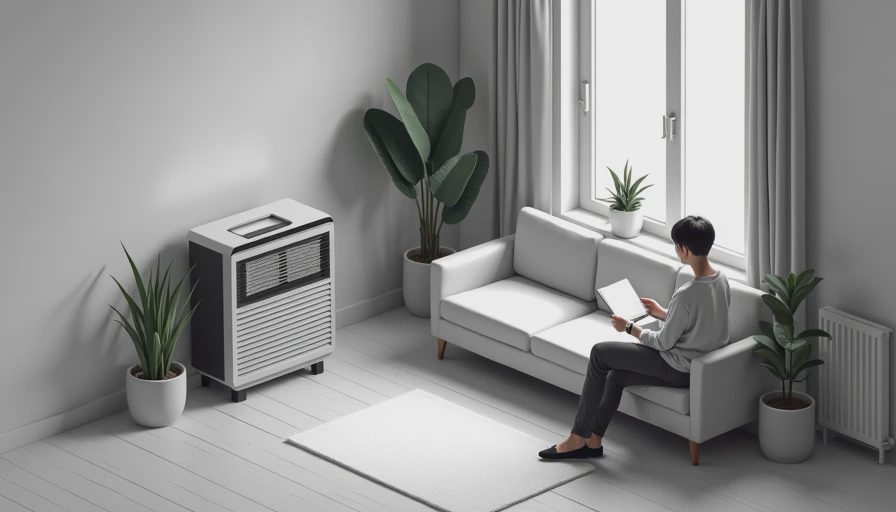
Placement matters too. Leave several inches around the intake and outlet, keep the unit off thick carpet when possible, and avoid hiding it behind a nightstand. In a humid Miami apartment, I also keep it away from direct splashes and do not treat it as a dehumidifier. Air purifiers remove particles; they do not meaningfully lower room humidity.

Filter costs can change the real price
The purchase price is only the opening charge. Replacement filters commonly cost about $20 to $60, depending on the model, and many last six to twelve months in ordinary use. Smoke, pet hair, construction dust, and continuous high-speed operation can shorten that interval. A $90 purifier with a $55 filter every six months can cost more over two years than a $160 machine with $35 annual filters.
Before buying, search the exact model number plus “replacement filter.” Confirm that filters are available from the manufacturer or a reliable retailer, not only from an unfamiliar marketplace seller. I also check whether a filter-reset button is present and whether the filter compartment seals tightly. A replacement that leaves a visible gap around the frame undermines the entire setup.
Do not wash a disposable HEPA filter. Vacuuming the outside prefilter is usually sensible, but forcing a vacuum nozzle into the fine media can damage it. If the filter smells sour, looks heavily gray, or the airflow has weakened, replacement is more useful than another round of cleaning.
Smart features are useful, but not essential
Wi-Fi control, scheduling, and air-quality sensors can be worthwhile when they solve a specific problem. Scheduling a purifier to run at medium speed before bedtime is practical. Checking air quality from your phone after cooking can also be helpful. But an app does not compensate for weak CADR, and a sensor near the exhaust may not represent the far side of the room.
The auto mode should respond to a real change. During testing, I introduce a controlled particle source and watch whether the sensor reacts, then compare the reading with a separate particle counter. Some inexpensive units respond quickly; some expensive ones barely change speed. If a model lacks a sensor, that is not automatically a dealbreaker. A reliable timer and three usable fan speeds can be more dependable than an inaccurate screen.
For most shoppers, I would prioritize this order: airflow, filter availability, low-speed noise, sealed construction, then smart controls. That order protects your budget and makes the machine more likely to run every day.
A simple buying checklist for your room
Measure the room rather than guessing. Multiply length by width, then choose a unit with enough published CADR for that footprint. For a 12-by-12 bedroom, a compact purifier with roughly 120 to 200 CFM of smoke CADR gives you useful headroom. For an office with a printer, open door, or frequent outdoor air leakage, choose the stronger end of that range.
Next, decide what problem you are solving. Pollen and dust call for strong particle filtration. Mild kitchen odor makes carbon helpful. Persistent damp odor points toward a moisture problem, leak, or mold source that a purifier cannot fix. A purifier can reduce airborne particles, but it should not be used to cover up visible mold or replace ventilation.
Finally, compare the two-year cost. Add the machine price, two to four replacement filters, and estimated electricity. A typical compact unit using around 20 to 50 watts costs modestly to run, but high-speed operation all day adds up. Look for a retailer with a clear return policy, then test the machine in your actual room rather than trusting a showroom demo.
A small room air purifier is worth buying when its airflow matches the space, its filter is easy to source, and its noise will not drive you to unplug it. If you share your room size, primary concern, and budget, I can help narrow the shortlist without steering you toward a machine that merely looks impressive on a shelf.