A small air purifier can be exactly what a bedroom, nursery, office, or studio apartment needs. It can also be a $40 fan with a blue LED and a filter too tiny to matter. I have tested more than 150 air and water appliances in my Miami home, where humidity, construction dust, and open windows create a useful stress test. The important question is not whether a compact machine looks modern. It is whether it moves enough filtered air quietly enough for you to keep using it.
Start with room size and clean air delivery
The first mistake shoppers make is treating a purifier's advertised square-foot rating as a guarantee. Those ratings often assume a specific number of air changes per hour, and the number drops quickly when the room is larger, the door is open, or the unit is running on a quiet setting. For a typical bedroom of 100 to 180 square feet, look for a unit with a meaningful clean air delivery rate rather than a decorative tabletop design.
A small air purifier with a CADR around 100 to 150 cubic feet per minute can be useful in a closed bedroom or home office. A machine rated closer to 200 CFM gives you more flexibility, especially in a living room. If a listing only says “covers up to 1,000 square feet” but does not clearly provide CADR, filter dimensions, or test conditions, I treat that claim as marketing until proven otherwise.
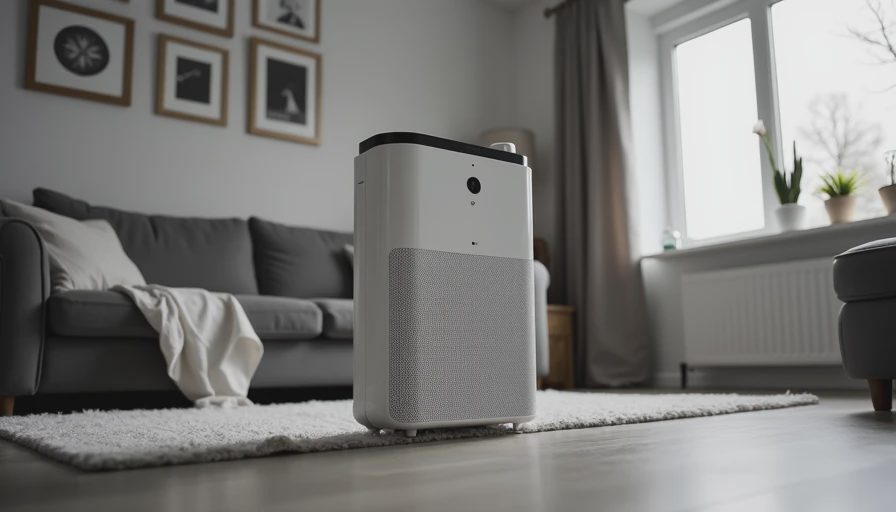
Placement matters just as much. Leave several inches around the intake, keep the exhaust away from a wall, and do not hide the unit behind a nightstand. In a Miami condo, I have seen people put a purifier inside a cabinet because they disliked the appearance. That turns an air cleaner into an overheated fan. Put it near the source of the problem, such as a bed, litter box, desk, or entryway, while preserving unobstructed airflow.
Filter design matters more than the logo
For particles such as pollen, dust, and smoke, a true HEPA filter is the feature I want to see first. HEPA filtration is designed to capture very small airborne particles, but the filter still needs enough surface area and airflow to perform well. A thin replacement cartridge packed into a tiny cylinder may technically contain a high-efficiency filter while moving very little air.
Look for a washable prefilter or an accessible outer screen. It catches hair and larger dust before those particles load the main filter. That can extend filter life and preserve airflow. Activated carbon is useful for some odors and gases, but a token dusting of carbon will not erase heavy cooking smells, wildfire smoke, or cigar odor from a whole apartment. Carbon weight matters, and manufacturers do not always make that number easy to find.
I also inspect replacement prices before recommending a small air purifier. A $90 machine that needs a $35 filter every four months can cost more over two years than a $160 model with a $25 annual cartridge. Search the exact model number, not just the brand, because filter shapes and prices can differ across otherwise similar product lines. If replacement filters are difficult to locate from the manufacturer or established retailers, that is a warning sign.
Noise, power use, and nighttime behavior
A purifier that cleans quickly but sounds like a bathroom exhaust fan will probably be switched off at bedtime. For sleeping, I look for a low setting that is genuinely quiet and a display that can be dimmed completely. A claimed 20 or 24 decibels is not meaningful if the unit rattles, pulses, or produces a high-pitched motor whine. I listen from the pillow, not from two feet away in a showroom.
A small air purifier typically uses modest electricity, often somewhere around 5 to 45 watts depending on its fan speed. At common residential electricity rates, that can amount to only a few dollars per month when operated continuously, but the exact cost depends on your local utility and runtime. Continuous low or medium operation is usually more useful than running the unit at maximum for ten minutes and then turning it off.
Auto mode deserves skepticism. Some models respond to airborne particles, while others mainly react to volatile organic compounds or use a sensor that is slow to change. I test auto mode with controlled particle changes and watch whether the fan actually responds. If the purifier shows a colorful air-quality ring but never increases airflow when the room gets smoky, the ring is decoration, not measurement.

Features worth paying for, and features I ignore
A timer is convenient, but it is not a substitute for a quiet motor. A filter-life indicator is useful when it is based on operating hours or measured airflow, though many basic models simply count down from a preset period. Child locks help in a nursery, and a reliable dimming option matters in a bedroom. Wi-Fi can be worthwhile if you want scheduling or remote control, but it should not add $50 to the price of a machine with weak airflow.
I am cautious with built-in ionizers and ozone-producing functions. Ozone is an irritant, so I prefer a purifier that cleans through mechanical filtration without requiring an ionization feature. Do not assume that “ionizer” means better air. In many homes, it means another setting to disable.
The best small air purifier is often the plain model with a strong fan, a well-sealed filter, accessible controls, and affordable replacement parts. Levoit, Coway, Blueair, and Winix each make compact models across different price ranges, but the model name matters more than the badge. Compare CADR, filter cost, noise behavior, and warranty rather than choosing by color or app design.
How to choose for common rooms
For a bedroom, prioritize low noise, display-off controls, and enough airflow for the entire room. For a home office, a compact unit with a front intake can sit beside a desk without blocking a wall. For pet odors, seek a larger carbon layer and expect to replace filters more frequently. For seasonal allergies, particle removal and proper placement matter more than fragrance cartridges or decorative wellness claims.
A small air purifier is not a substitute for ventilation, source control, or fixing water damage. It will not remove carbon dioxide from a stuffy room, and it cannot solve mold growth inside walls. Open a window when outdoor conditions are favorable, repair leaks, vacuum regularly, and keep indoor humidity in a reasonable range. In humid coastal homes, inspect the filter for dampness and musty odor rather than assuming more runtime fixes everything.
Before buying, write down the room's length and width, then multiply them for approximate square footage. Check the purifier's CADR, filter availability, lowest-setting noise, and annual running cost. That five-minute check eliminates most impulse purchases.
My practical buying standard
I would rather see a $100 small air purifier with honest airflow and $20-to-$35 replacement filters than a $250 model built around an oversized touchscreen. Spend more when the room is larger, the air problem is persistent, or the unit will run every day. Spend less when you need targeted cleaning beside a bed or desk and can close the door.
The right choice should disappear into your routine: low enough noise to sleep through, enough airflow to show a measurable particle reduction, and filters you can actually afford to replace. If you compare those basics before chasing smart features, you can find a compact cleaner that earns its counter space instead of becoming another glowing appliance in the corner.