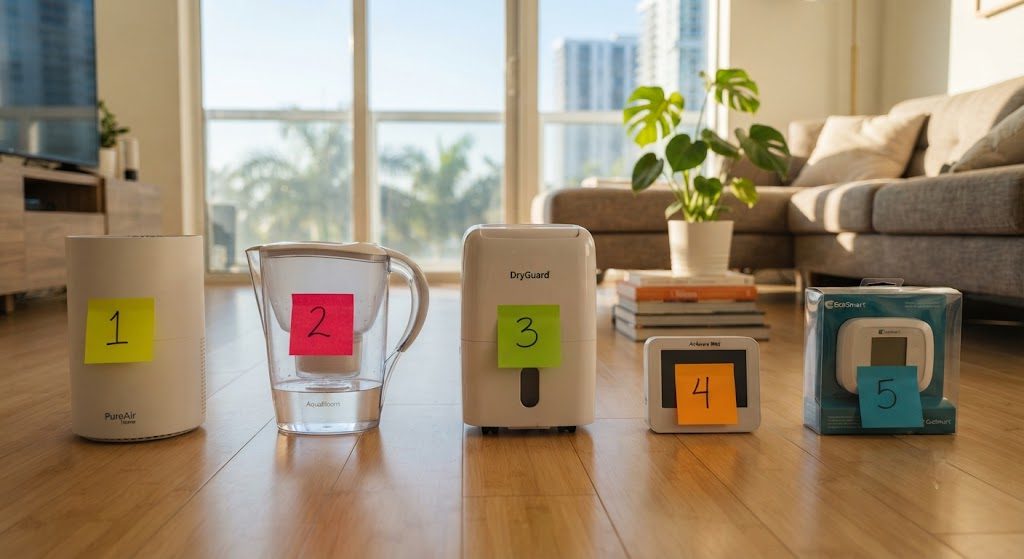
I've tested over 150 appliances across five years in coastal humidity, and the most common question I get isn't "which one should I buy?" It's "what should I buy first?" People feel overwhelmed. The market throws air purifiers, water filters, humidifiers, dehumidifiers, monitors, and smart thermostats at you all at once, and every listing insists it's the thing you need right now. I've built my own IAQ setup piece by piece, and I've made the expensive mistakes so you don't have to. Here's the order that actually makes sense, whether your starting budget is $100 or $500.
Priority 1: A Good Air Purifier for Your Bedroom
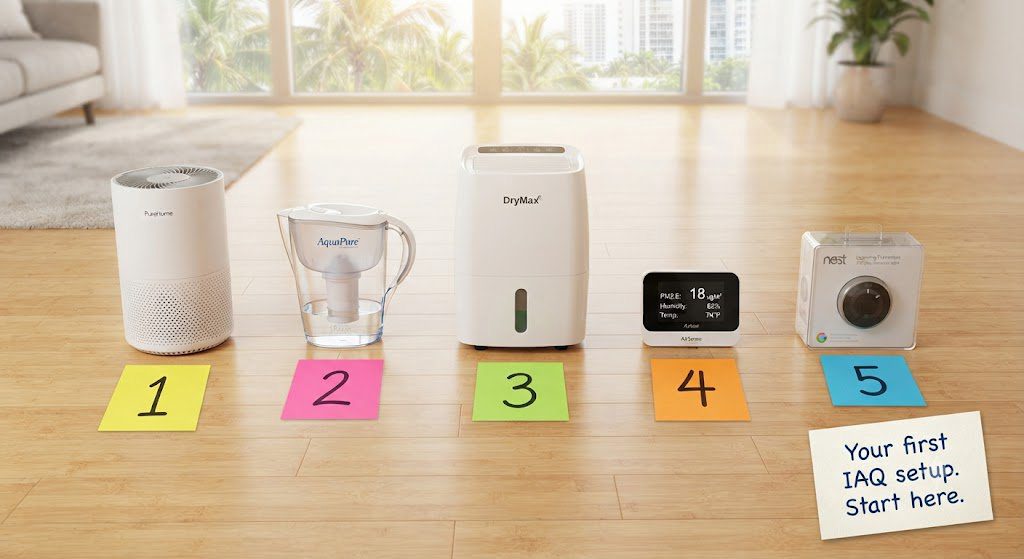
Start where you spend eight hours a day breathing unconsciously. A genuine H13 HEPA air purifier sized for your bedroom will do more for your daily health than anything else on this list. You'll sleep better, wake up with clearer sinuses, and reduce your exposure to the fine particles that sneak in from cooking, outdoor pollution, and dust. Look for a Smoke CADR of at least 150, a noise level under 30 dB on low speed, and a generic replacement filter that won't bankrupt you. Expect to spend $80–$180 for something that actually works. Avoid "HEPA-Type" and anything that fits in a cupholder. If you have allergies or asthma, this is non-negotiable. Do this first.
Priority 2: A Water Filter That Matches Your Biggest Complaint
If your tap water smells like a swimming pool, start with a simple activated carbon pitcher — a Brita or similar. It'll remove chlorine and improve taste for under $25. If you're worried about lead, old pipes, or want the cleanest possible water for drinking and cooking, jump straight to a countertop carbon block system or an under-sink reverse osmosis unit. You'll spend $60–$250, but the taste difference is night and day, and the TDS meter will confirm it. Don't obsess over removing everything unless you have a specific contaminant concern. Fix the taste and smell first; the meters will tell you if you need more.
Priority 3: A Dehumidifier — If You Live in Humidity
If you're in a coastal climate like Miami, or your basement smells musty, a dehumidifier is not optional. Mold and dust mites thrive above 60% relative humidity. A 50-pint unit (under the new DOE standard) will handle a 400-square-foot bedroom even when outdoor humidity is 80%. Don't undersize it; the pint rating on the box is optimistic. Set it to 50% RH, use continuous drainage if possible, and watch your comfort level transform. If you live in an arid climate, skip this and jump to priority 4.
Priority 4: An Air Quality Monitor — Not to Obsess, But to Verify
Once you have a purifier running, you'll want to know if it's working. A consumer-grade PM2.5 monitor in the $60–$120 range will show you relative trends — not lab-accurate numbers, but enough to see a spike when you cook bacon and a drop when the purifier kicks in. Look for a model that displays PM2.5, temperature, and humidity. Don't stare at it all day. Use it to check your purifier's placement, to know when to run the exhaust fan, and to confirm that your bedroom CO₂ isn't spiking overnight. If the monitor reads consistently low and you feel good, trust that. If it reads high during a rainstorm, it might just be mistaking humidity for particles — context matters.
Priority 5: A Smart Thermostat — Only If You're Ready
A smart thermostat can save energy and make your home more comfortable, but it's a luxury, not a first step. Install one after you've addressed your air and water. If your current thermostat works and your energy bills are reasonable, wait. If you do upgrade, pick a model with remote sensors for multi-room balancing and a simple app that doesn't upsell you every week. The energy savings are real — I measured an 8–22% cooling reduction in my Miami tests — but only if you set it up correctly and don't override it constantly.
What You Can Skip (For Now)
Whole-house water filters, ERVs, and expensive multi-sensor indoor weather stations are powerful tools, but they're step 10, not step 1. Nail the basics first. A $150 air purifier in your bedroom, a $25 water pitcher, and a $50 monitor will improve your daily life more than a $2,000 ERV with no purifier running.
Start small. Use the meters. Trust what you can measure. And if you're ever standing in the aisle confused, you know where to find me.