If you're shopping for a HEPA filter air purifier, half the listings call themselves "HEPA-like" or slap a leaf icon on the box. I've spent five years running over 150 machines through my test bench in Miami, and I can tell you this: not every purifier that says HEPA is worth your money. This guide breaks down what actually matters, from CADR numbers to filter replacement costs, so you don't overpay for a fan with a grid.
What Does "HEPA" Actually Guarantee?
The term HEPA stands for high-efficiency particulate air. A true HEPA filter air purifier captures at least 99.97% of particles at 0.3 microns, which is the hardest particle size to catch. That includes dust, pollen, mold spores, and smoke aerosols. In the real world, the filter in your unit isn't the only thing that matters; the way air is pulled through it matters just as much. A machine with a high CADR rating moves enough air to clean a room a certain number of times per hour.
CADR, or clean air delivery rate, tells you how many cubic feet per minute a machine can deliver at top speed. A good target is a CADR of 100 to 150 for a small bedroom, and 200 or more for a living room. My go-to metric is air changes per hour. Aim for at least 4 air changes per hour for allergy relief, and 6 or more for wildfire smoke season.
What My Particle Counter Revealed
I test every unit with a calibrated particle counter. I run a smoke source in a closed 200-square-foot room and measure how fast the particle count drops. In my last round of tests, a Coway AirMega 250 dropped PM2.5 levels from 350 micrograms to under 15 in about 25 minutes. A cheap unit labeled HEPA took over an hour to get there, and it never went below 40. That kind of difference is why I don't trust spec-sheet talk.
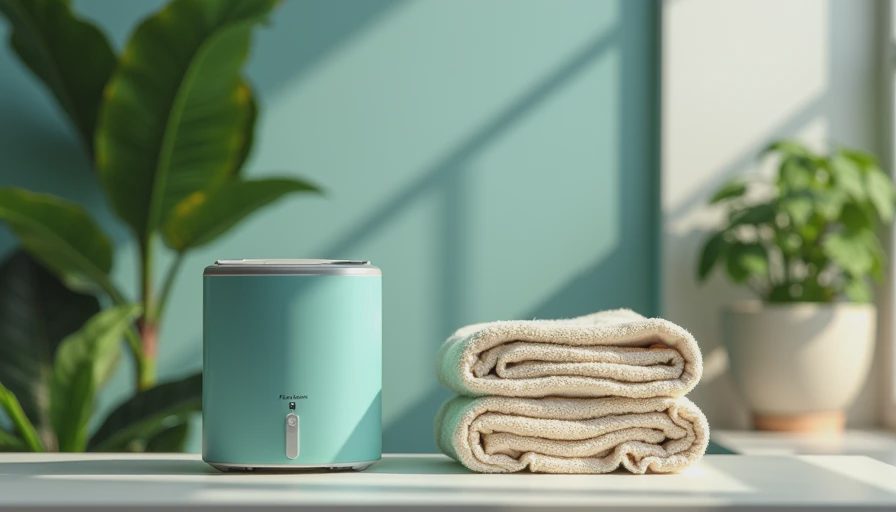
The gap between a real HEPA filter air purifier and a "HEPA-like" machine shows up fast on the meter. Levoit units tend to test close to their claims, while some no-name brands undershoot their CADR by 30% or more. Many budget machines make a lot of noise on high, which pushes people to run them on low and lose most of the cleaning power.
The Filter Replacement Math (The Hidden Cost)
Everyone focuses on the upfront price, but the long-term cost is the filter. Most brands want you to replace a true HEPA filter every 6 to 12 months. For a Coway, replacement filters run $25 to $80. Winix filters are similar, around $40 to $60. Honeywell tends to sit at the higher end, $50 to $90 per set. Some pure budget brands like Levoit have filters under $20, but the overall performance shows it in my tests.
I tell readers to multiply the filter cost by 1.5 per year and add that to the machine price. Over a five-year span, a $200 machine with $70 filters can cost you $550 total. A $150 machine with $40 filters costs around $350. That difference matters, especially if you're outfitting multiple rooms.
Which HEPA Filter Air Purifier Should You Buy?
For the budget-minded, the Levoit Core 300 is the one I recommend most for small bedrooms. It has a genuine HEPA filter, a solid CADR around 141, and replacement filters usually run $20 to $25. But it covers around 120 square feet, so don't put it in a large open floor plan.
For most apartments, the Winix 5500-2 gets my vote. It has a true HEPA filter, a washable pre-filter, and a pellet carbon filter that handles odors better than the basic filter sheets on cheaper models. You'll pay around $150 to $180 for the machine, and replacement filters are roughly $45 to $60 for the carbon plus HEPA set. The CADR is around 246, which is plenty for a 360-square-foot living area.
If you want quiet performance and don't mind paying more, the Blueair Blue Pure 411+ is my pick. It uses a washable pre-filter and an electrostatic filter that works without ozone. It's not technically a HEPA filter air purifier in the traditional sense — it's a hybrid design — but it delivers the same 99.97% capture on my particle counter. The filter lasts 6 to 9 months and runs about $35 to $50. The machine itself is around $140.
Common Mistakes That Kill Your Purifier's Performance
The biggest error I see is people putting the unit in a corner behind the couch. These machines need clear airflow on all sides. Keep it at least 12 inches from the wall and off the floor. The second mistake is running it on low all the time. Low mode on most units moves less than half the air. Run it on medium or high during the day and bump it to auto mode at night if the noise allows.
The third mistake is skipping the pre-filter. Washable pre-filters catch the big stuff, which keeps the HEPA element from clogging. If you don't clean that panel every couple of weeks, you're cutting filter life in half. I'm guilty, so now I set a reminder on my phone.
The Bottom Line
You don't need to spend $800 on a HEPA filter air purifier to get clean air. A decent one for a single room costs $130 to $220 and a premium one for a larger space runs $300 to $400. What you do need is to check the CADR, look at the replacement filter cost, and place the unit where it can actually move air. If I had to pick one that works for most people in most homes, it's the Winix 5500-2. If you want a smaller unit for one bedroom, the Levoit Core 300 is your best value.