If you live with dry skin, scratchy throats, or a bedroom that feels like a desert every time the AC kicks on, the best humidifier is not a luxury item. It is a comfort tool, and in the wrong room it can also become a mold machine. I test enough home appliances in Miami to know that humidity is not abstract here; your gear either helps or it creates a damp headache. The trick is choosing a unit that matches your room, stays easy to clean, and does not sound like a small airport at 2 a.m. In other words, the best humidifier is the one you will actually keep running and actually maintain.
What a good unit has to do
The best humidifier should match the room before it does anything else. In practice, that means asking whether you want cool mist, warm mist, or a more self-regulating evaporative setup. Ultrasonic units are quiet and often cheaper to run. Evaporative models use a wick and a fan, which makes them a little louder but often simpler to manage in a bedroom or family room. Steam vaporizers heat water and can feel soothing in winter, but they are not my first pick for all-night use.
The other question is control. A decent machine should raise comfort without turning the room into a greenhouse. I like to keep indoor humidity roughly between 35 and 50 percent relative humidity. Below that, your nose and skin can feel dry. Above that, you start flirting with window condensation, dust mite comfort, and the kind of stale smell that tells you a tank has gone too long without a scrub. A cheap hygrometer, usually under 20 dollars, helps you keep the room honest.
Cleaning and noise are the real test
The best humidifier is the one you can clean in five minutes, not twenty. That sounds boring until you are standing over a sink with a slimy tank and a brush that cannot reach the corners. Top-fill tanks are easier because you do not have to flip the whole base over every time you refill. Smooth interiors beat deep ribs and weird decorative channels every single time, because mineral residue and biofilm love hiding in tight spots.
Noise matters more than most product pages admit. A low setting in the 28 to 35 decibel range is easy to live with in a bedroom. Once you get closer to box-fan territory, people stop using the unit even if the output is good. I also pay attention to how often the filter or wick needs attention. On evaporative models, replacement wicks often run around 10 to 20 dollars each, and a unit that asks for constant upkeep gets expensive fast. If the maintenance routine feels like a chore on day one, it will be a chore on day thirty.
Tank size, runtime, and room size
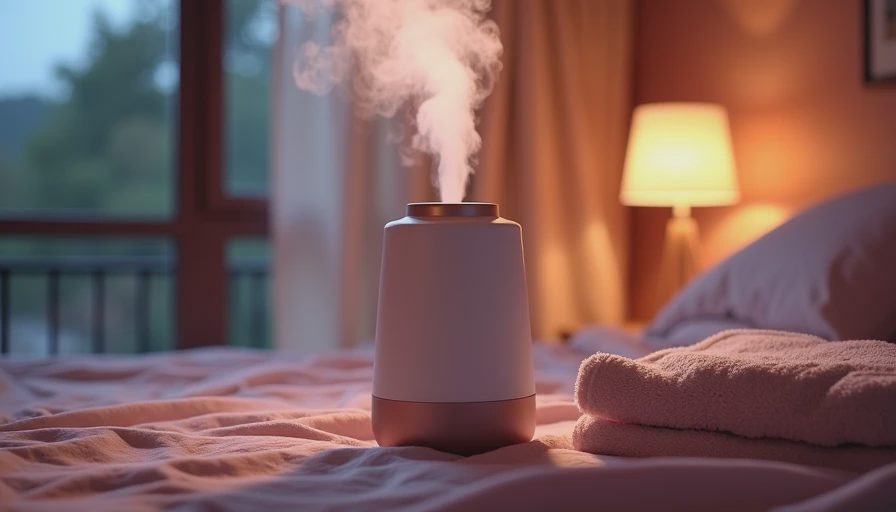
The best humidifier should fit the square footage and runtime you actually need. A small tank can be fine for a nursery, office, or guest room, but it may dry out before morning in a larger primary bedroom. Bigger is not automatically better, either. If a unit has a huge reservoir but weak output, you are still going to wake up to a dry room and a half-full tank.
When I shop, I look at three numbers together: the room rating, the tank capacity, and the stated runtime on a low or medium setting. A 0.8-gallon tank can be reasonable for modest spaces, while 1.2 to 1.5 gallons gives you more breathing room for overnight use. That said, those specs only matter if the refill opening is wide enough to use without splashing water across the counter. I would rather own a simpler machine with a practical tank than a flashy model that makes refilling feel like a plumbing test.
How it behaves in a real apartment
The best humidifier is the one that works with your AC instead of fighting it. In Miami, the air conditioner is already stripping moisture out of the room, so a humidifier has to add comfort without pushing relative humidity so high that you get window fog or a musty smell. Placement matters too. Keep it off carpet if you can, give it a little space from the wall, and do not park it directly under shelves that will catch damp dust.
Water quality is another overlooked piece. If your tap water is hard, some ultrasonic units can leave white dust on nearby furniture. That does not mean the machine is broken; it means the minerals in the water are going airborne. Distilled water reduces that mess, and it can also keep the tank cleaner between washes. For a lot of households, that tradeoff is worth it if you hate wiping film off a TV stand every few days. I also like a clear auto shutoff when the tank runs dry, because nobody wants a dry motor humming through the night.
Brands, prices, and replacement costs
Brands are easier to sort once you know what category you are shopping. Honeywell and Vicks are familiar names in basic evaporative and steam-style categories. Levoit tends to show up with cleaner-looking ultrasonic units. Dyson usually sits in the premium bracket with a bigger design focus and a higher price tag. None of that means one logo wins automatically. It just helps you narrow the field before you compare tank capacity, noise, and parts availability.
Price is another place where buyers get tripped up. You can find serviceable entry-level units around 30 to 60 dollars, solid midrange models in the 60 to 150 dollar range, and premium machines that climb past 300 dollars. The real question is total cost over a year. If the filter or wick needs regular replacement, add that into the math. A machine that looks cheap on the shelf can end up costing more than a cleaner, simpler model once you buy parts and cleaning supplies. That is why I care about access to replacement filters as much as I care about the brochure specs.
The simple way to choose one
The best humidifier is rarely the flashiest one on the shelf. Start with the room, then the sound, then the cleaning routine. If you know the unit will sit in a bedroom, lean toward something quiet with a wide opening and automatic shutoff. If you need a family room machine, think more about tank size and output. If you hate maintenance, skip anything with a fussy filter path or a tank full of little corners.
When I test appliances, I look for the same pattern every time: a machine that does one job well, is easy to live with, and does not demand a monthly ritual just to stay decent. If you want the best humidifier, buy the one that fits your space and your patience, not the one with the prettiest app screenshot. That is how you end up with a room that feels better and a purchase you do not regret in three weeks.